


Hybrid vs Electric Car Servicing: What’s Different and What It Costs
March 11, 2026
Hybrid and electric vehicles are changing the way many drivers think about performance, running costs and long-term maintenance. While both are often grouped together as alternatives to traditional petrol cars, they are not serviced in the same way. Hybrids still rely on a petrol engine alongside an electric system, while EVs depend entirely on battery power, which means the maintenance needs, service intervals and costs can differ more than many people expect.
Drivers often have the same questions about hybrid and electric vehicle servicing. At Kar Pro Tyre & Auto, our mechanics in Campsie regularly explain the differences, from oil changes in hybrids to battery checks and service intervals for EVs. Understanding what each vehicle needs helps owners budget more accurately, protect manufacturer warranties and avoid surprises as the vehicle gets older.
This article breaks down the key differences between hybrid and electric car servicing, including what gets checked, how often servicing is usually required, what specialist equipment may be involved and where costs typically sit over time. By the end, drivers should have a clearer idea of what to expect from each type of vehicle and how servicing compares with a conventional petrol car.
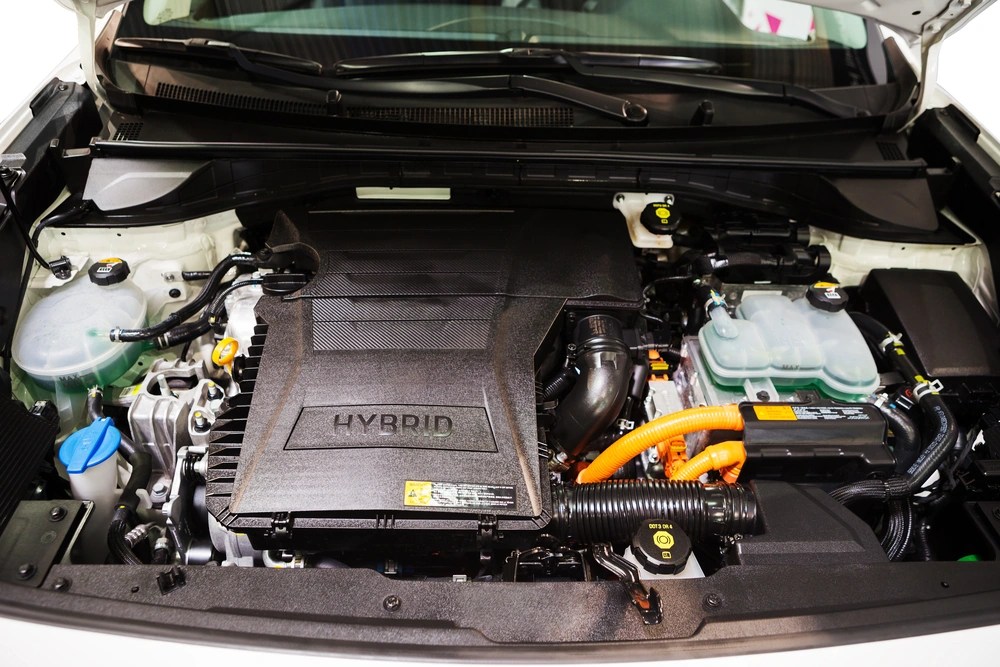
Hybrid and electric vehicles may look similar from the outside. However, under the bonnet, they are very different machines. These differences in how they are powered and built are exactly what change the type of servicing they need and what that servicing is likely to cost over time.
Both use high-voltage electrical systems and battery packs, yet they rely on them in different ways. Hybrids still have a petrol engine and many of the same serviceable parts as a traditional car. Fully electric vehicles remove the engine and most of its supporting systems, which cuts out some maintenance items but adds others that are unique to EVs.
A hybrid has two power sources that work together. It combines an internal combustion engine with one or more electric motors and a battery pack. In many hybrids, the petrol engine does most of the work on highways while the electric motor helps at low speeds and during take-off. This means a hybrid still has engine oil, coolant belts, spark plugs, a fuel system and an exhaust. All of these require periodic checks or replacement.
A battery electric vehicle has no engine at all. Instead, it uses a large battery pack and one or more electric motors to drive the wheels. There is no engine oil, no timing belt, no fuel system and no exhaust. Servicing focuses more on the condition of the high-voltage battery, cooling system, drivetrain software and braking system. The motor and reduction gear unit do have lubricants, but they are changed far less often than engine oil in a hybrid.
Hybrids use a smaller high-voltage battery that is constantly charged and discharged as the car drives. Because the battery is supported by the engine, it can be smaller and usually has a longer service life if the vehicle is maintained correctly. The battery is air- or liquid-cooled and the cooling filters and fluid need periodic attention.
Electric vehicles rely entirely on a much larger battery. This pack is more expensive and more sensitive to heat and charging habits. Servicing often includes battery health checks, software updates for battery management and inspection of cooling circuits. Any work around high-voltage components in hybrids or EVs must be carried out by technicians with the correct training and insulated tools, affecting who can safely service the vehicle.
Both hybrids and EVs use regenerative braking, where the motor helps slow the car and recovers energy into the battery. This takes strain off the physical brake pads and discs, so they usually last longer than in a conventional petrol car. However, the brake fluid still absorbs moisture and must be replaced at the intervals specified by the manufacturer.
Hybrids still have all the normal engine-related wear items, such as filters, belts and fluids, so their servicing schedule looks more like a regular car with extra checks for the electrical system. Electric vehicles have fewer moving parts, so there are fewer routine mechanical replacements, but tyre wear can be higher due to the extra weight and instant torque. Regular wheel alignments, suspension checks and correct tyre selection become more important for EV owners.
Hybrid and electric cars still need regular servicing, but what gets checked and how often is a bit different from a traditional petrol vehicle. Professional mechanics look after all the usual safety items like brakes, steering and tyres as well as the unique systems that make a hybrid or EV run. Service intervals are usually guided by the logbook, but usage patterns, especially lots of short trips or heavy commuting, can mean some items need attention sooner.
Both hybrid and electric vehicles typically follow a 12‑month or set-kilometre schedule. The exact timing varies by make and model, so experts always start with the manufacturer’s recommendations and then adjust based on how the car is actually used.
Hybrids still have an internal combustion engine, so they retain many of the same service needs as petrol cars. At each scheduled service, the workshop will usually replace engine oil and do a filter check. Also, top up coolant, brake fluid and other fluids. Inspect the air filter and cabin filter and scan the engine management system for fault codes.
Because a hybrid uses both an engine and an electric drive system, there are extra checks. The technician will inspect the high-voltage battery cooling system, including fans and filters where fitted, check the hybrid inverter and associated wiring for signs of wear or damage and confirm safe insulation levels with specialised test equipment. Regenerative braking means pads and rotors often last longer than on a normal car, but the friction brakes still need regular inspection and occasional cleaning to prevent corrosion from light use.
Most hybrids need a minor service every 10,000 to 15,000 km, with larger services where more parts are replaced at 30,000 to 60,000 km intervals. Fluid changes, such as engine coolant or transmission fluid, occur less often but are important for battery and motor longevity.
Electric vehicles do not have engine oil, spark plugs or exhaust systems, so some traditional service items disappear. Instead, regular EV servicing focuses on the high-voltage battery pack charging system and safety checks. This includes a battery health report using diagnostic tools, inspection of high-voltage cables, connectors and seals and confirmation that the onboard charger and DC fast-charge inlet are performing correctly.
Because EVs are heavier and deliver instant torque, tyres can wear more quickly, especially on the driven wheels. Tyre rotation, wheel alignment and checking for uneven wear are key parts of every service. Brakes also rely heavily on regenerative systems, so technicians inspect pads, rotors and brake fluid condition to ensure the friction system is ready for emergency stops.
Most EV makers specify time-based servicing, such as every 12 months, regardless of low kilometres, because fluids degrade and safety systems still need inspection. Some models stretch intervals to 24 months, but annual checks are often recommended for Australian conditions.
Hybrids and EVs share many conventional components that still need routine attention. At each visit, professionals inspect steering and suspension joints, shock absorbers and bushes; check lights, wipers and washers; test the 12‑volt battery that runs accessories and control systems; and ensure software and firmware updates are applied if available.
Brake fluid changes are typically required every 2 years for hybrid and electric vehicles to maintain braking performance and prevent internal corrosion. Cabin filters usually need replacement every 12 to 24 months, especially in urban or dusty environments, to keep air quality and HVAC performance at their best.
When drivers compare hybrid and electric vehicles to traditional petrol cars, one of the first questions is what the servicing will actually cost. While every vehicle and workshop is different, there are clear price patterns that help set realistic expectations over a year or over the life of the car.
Mechanics base pricing on the vehicle type, the logbook requirements and the condition of key components like brakes and tyres. Below is a guide so owners can budget and avoid surprises.
Hybrid servicing costs usually sit slightly above equivalent petrol models because there are extra checks on the high-voltage system, plus the usual engine and transmission work. For a typical passenger hybrid:
Hybrids can save money on brakes because regenerative braking reduces pad and rotor wear. Many hybrid owners find brake replacement intervals are noticeably longer than on a similar petrol car, which can offset some of the extra hybrid-specific inspection time across a few years.
Electric vehicles have fewer moving parts than hybrids or petrol cars, so routine servicing is often cheaper per visit and less frequent. There is no engine oil or timing belt and far fewer fluids to replace. For many EVs:
EVs also benefit from very low brake wear because of strong regenerative braking. However, tyre costs can be higher, particularly on heavier, high-torque models, so factor in more frequent tyre replacement as part of overall running costs.
Brand and model strongly influence pricing. Premium hybrids and EVs often use more expensive parts and require extra labour time, which can push services towards the top of the ranges above. Software updates or high-voltage battery diagnostics can also add to costs if they are outside standard logbook items.
Driving style and use matter as well. A hybrid or EV used mostly in city traffic will often need tyres and possibly suspension components sooner than one used mainly on the highway, even though mechanical servicing may be less demanding.
Use the manufacturer's logbook as the starting point, then tailor the service to how the car is actually driven. This approach keeps costs sensible while still protecting the warranty and the long-term health of the hybrid or electric system.
Battery condition is the biggest technical and cost difference between servicing hybrids and fully electric vehicles. For most owners, the key questions are how long the battery will last, how to keep it healthy, what happens if it fails and who is qualified to work on it. Experts focus on checking battery performance early so small issues are picked up before they turn into expensive repairs.
While both hybrid and EV batteries are built to last many years, they are not identical in design or in how they age. Hybrids usually use smaller packs that assist the petrol engine, while EVs rely on a large high-voltage battery for all driving. This changes the type of checks technicians must perform on the equipment they use and the kind of warranty support that applies.
In a hybrid service, mechanics will usually assess the battery by scanning the hybrid control system, checking for fault codes and looking at voltage and temperature data from individual modules. Many hybrids also allow a state-of-health reading that helps show if one part of the pack is weaker than the rest. Because the engine also supports the car, a slightly degraded hybrid battery often shows up first as poor fuel economy or the engine running more often.
For fully electric vehicles, battery health is even more critical. A standard EV service can include:
If the car supports it, the number of rapid charges and deep discharges is also reviewed.
Most hybrid and EV manufacturers provide separate battery warranties, often 8 years or a set kilometre limit. In many cases, a warranty claim is only accepted if the battery capacity falls below a defined percentage, often around 70% of its original capacity.
Routine servicing at a qualified workshop helps support warranty claims because service records show the battery has been used and maintained within the maker’s guidelines. Some brands require software updates or specific battery checks to be logged at certain intervals. Skipping these can make future claims harder.
Wear and tear from normal ageing is usually not covered beyond the capacity threshold. Damage from accidents, incorrect jump-starting or unapproved modifications is also commonly excluded, so only trained technicians must work on the high-voltage system.
Hybrid and EV battery systems operate at high voltage, so they require specialist tools, safety gear and procedures. At a minimum, a workshop needs insulated tools, high-voltage-rated gloves, appropriate test equipment and safe isolation processes before any work is carried out.
Technicians working on hybrid and electric vehicles need specific training so they can safely:
This specialised approach reduces the risk of misdiagnosis, helps protect the warranty and gives owners a clearer picture of actual battery health and likely long-term costs.
Hybrids and EVs are not difficult to service, but they do need a different approach from a standard petrol vehicle. A hybrid still has many of the same service items drivers are used to, including engine oil, filters, coolant and regular engine-related checks. An EV removes many of those parts, which can lower routine servicing needs, but it still requires proper attention to battery health, braking systems, tyres, suspension and software. From a workshop point of view, the difference is not that one vehicle is maintenance-free and the other is not. It is that the servicing focus changes depending on how the vehicle is built. Understanding that difference helps drivers plan ahead, avoid missed service items and make more informed decisions about long-term running costs.


.webp)
.webp)