


Can a Punctured Tyre Be Repaired or Does It Need Replacing?
June 5, 2026
A punctured tyre never seems to happen at a convenient time. Whether it occurs in the driveway or halfway through a busy day on the road, it immediately raises the same question: can the tyre be safely repaired, or is replacement the better option?
For drivers looking after their tyres in Campsie, understanding the difference is important for managing costs and maintaining vehicle safety. At Kar Pro Tyre & Auto, puncture assessments are approached with a focus on safety and practicality. A small hole in the right part of the tyre may be repairable, but damage involving the shoulder, sidewall or internal structure generally requires replacement.
This article explains the common causes of tyre punctures, the conditions that determine whether a repair is suitable and why a professional inspection is essential before a damaged tyre goes back on the road.

Tyre punctures are commonly associated with sharp road debris, potholes, kerbs and general tyre deterioration. The cause of the damage can provide useful clues about whether the tyre is likely to be repairable.
A clean puncture caused by a small nail in the central tread area may be suitable for repair. Damage caused by a hard impact, prolonged underinflation or ageing rubber is more likely to compromise the tyre structure and require replacement.
Nails, screws, pieces of metal and other sharp objects are among the most common causes of punctures. These objects are often picked up in car parks, construction areas and along road edges where debris can accumulate.
In many cases, the object remains lodged in the tread and creates a slow leak rather than an immediate flat tyre. A small, clean puncture in the central tread area may be repairable if the tyre is otherwise in good condition and has not been driven while severely underinflated.
Glass and irregularly shaped debris can be more problematic because they may cause cuts or tears rather than a clean puncture. These types of damage require closer inspection.
A hard impact with a pothole, kerb or sharp road edge can cause damage that is not always obvious from the outside. The tyre may become pinched between the road surface and the wheel rim, placing significant stress on the sidewall and internal layers.
Impact damage may cause:
Bulges, cuts and sidewall damage are serious because they can indicate that the internal cords have been weakened. These issues cannot be safely addressed with a standard puncture repair.
Tyres need the correct air pressure to maintain their shape and safely carry the weight of the vehicle. When a tyre is underinflated, the sidewalls bend more than they should with each rotation. This creates heat and places additional stress on the internal structure.
Overloading the vehicle or towing a heavy trailer with underinflated tyres increases this strain. Extended driving in hot conditions can make the problem worse.
Regular pressure checks and appropriate tyre maintenance can help extend the life of your car tyres and reduce the likelihood of premature wear or avoidable damage.
Damage caused by overheating, layer separation or weakened sidewalls is not the same as a simple puncture. Even if the original leak appears minor, the tyre may need to be replaced if its structure has been compromised.
Older tyres and tyres with worn tread are more vulnerable to punctures. As rubber ages, it can harden and develop cracks. The tread also becomes thinner over time, making it easier for sharp objects to penetrate.
A puncture may be repairable in isolation, but the overall condition of the tyre still matters. Replacement may be the more practical option if the tyre is approaching the NSW minimum tread depth of 1.5 mm, shows uneven wear or has visible cracking. Drivers should also be aware of the broader signs that their tyres need replacing, particularly when several issues appear at the same time.
A punctured tyre may be repairable when the damage is small, clean and confined to the central tread area. The tyre must also be in suitable condition internally and externally.
A workshop cannot determine this by looking at the outside of the tyre alone. The tyre needs to be removed from the wheel so the inner liner, sidewall and surrounding structure can be checked for hidden damage.
The location of the puncture is one of the most important factors. Repairs are generally limited to the central tread area, sometimes referred to as the crown of the tyre.
This part of the tyre is designed to make contact with the road and contains the structure needed to support a permanent repair. Small holes caused by nails or screws are the most common examples of damage that may be repairable.
A puncture outside this area is more difficult to repair safely because the shoulder and sidewall flex more heavily as the tyre rolls.
A repair may be possible when the puncture is a clean, round hole caused by a small object such as a nail or screw.
Replacement is generally safer when the damage involves:
The technician will also consider the tyre type and the repair guidelines that apply to the individual tyre.
A simple puncture can become irreparable if the vehicle continues to be driven after the tyre loses pressure. Even a relatively short distance can generate enough heat and friction to damage the internal structure.
A tyre is more likely to be repairable if the driver stops soon after noticing the puncture, pressure warning or change in handling. The longer the tyre is driven while flat or severely underinflated, the greater the likelihood that replacement will be required.
A repair only makes sense when the tyre still has sufficient usable life remaining. Before approving a repair, a technician will consider the tyre’s tread depth, wear pattern, age and previous repair history.
A tyre may not be a suitable candidate for repair if it has:
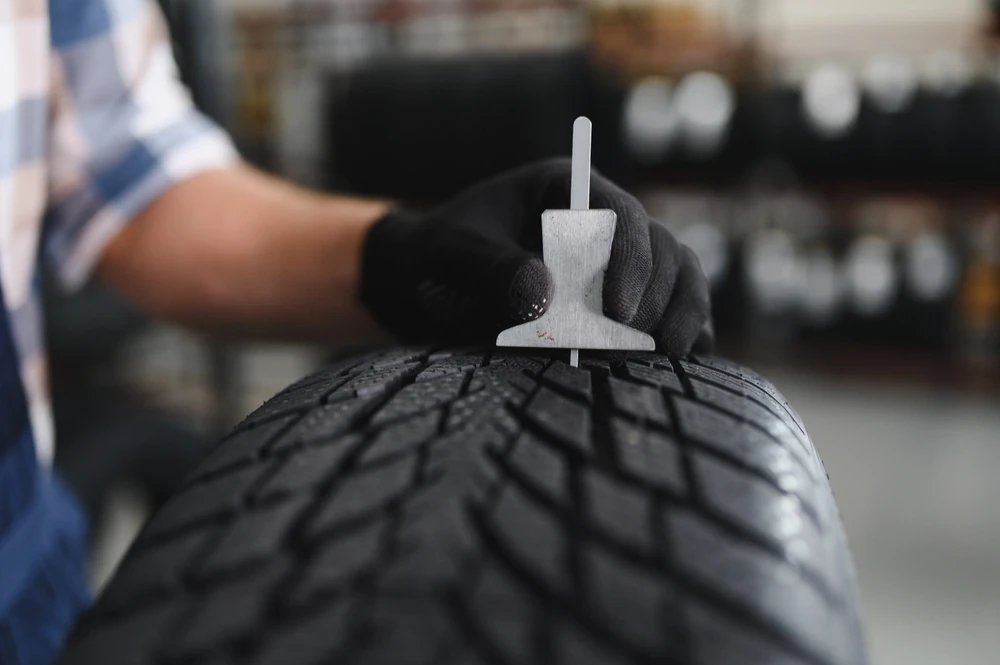
Some types of tyre damage cannot be safely repaired, even when the tyre is still holding air. Replacement is generally required when the damage affects the flexible or structural areas of the tyre or when the internal condition cannot support a permanent repair.
Punctures in the shoulder or sidewall should not be treated like holes in the central tread area. The shoulder is the curved transition between the tread and the sidewall, while the sidewall supports the weight of the vehicle and flexes continuously as the tyre rolls.
A repair in these areas is unreliable because the movement and pressure placed on the tyre can cause the repair to fail. A nail hole, cut, tear or impact mark in the sidewall generally means the tyre needs to be replaced.
A bulge or blister can indicate that the internal cords have been damaged. This may occur after hitting a pothole or kerb, particularly if the impact has pinched the tyre against the rim.
Exposed cords, distorted rubber and visible internal separation are also signs of structural damage. These issues increase the risk of tyre failure and cannot be corrected with a puncture repair.
A clean puncture is different from a cut or gash. When rubber has been torn, split or removed, the surrounding structure may no longer provide enough support for a safe repair.
Large holes and irregular damage should be assessed carefully. Replacement is usually the safer option when the damage extends beyond the limits of an approved repair method.
A tyre may no longer be worth repairing if it is already close to the end of its service life. In NSW, tyres must have at least 1.5 mm of tread on the surfaces that normally contact the road. However, tread depth is not the only consideration.
Cracking, hardened rubber, uneven wear and other signs of deterioration may mean the tyre should be replaced, even when the puncture itself appears minor.
Driving on a flat or severely underinflated tyre can quickly turn a repairable puncture into a replacement situation. As the pressure drops, the tyre loses its normal shape and the sidewalls begin to flex excessively.
This movement generates heat and places strain on the internal layers. The wheel rim may also press into the tyre, damaging the inner liner, bead area and sidewall.
Internal damage is not always visible from the outside. A tyre may appear normal after it has been reinflated but still be unsafe to use.
Once the tyre is removed from the wheel, a technician may find:
If these signs are present, the tyre should be replaced rather than repaired.
Temporary plugs, aerosol sealants and puncture repair kits can be useful when a driver needs to move the vehicle away from an unsafe location or travel a short distance to a workshop. However, they should not be treated as a permanent solution.
A temporary product may stop or slow the leak without revealing whether the tyre has internal damage. The tyre still needs to be professionally inspected as soon as possible.
Some sealants can also affect the way the tyre is inspected or repaired. Drivers should tell the technician if a sealant or temporary plug has been used.
Run-flat tyres are designed to allow limited driving after a loss of pressure. Their reinforced sidewalls can help the vehicle continue moving for a restricted distance at a reduced speed, depending on the tyre manufacturer’s specifications.
However, this does not automatically mean the tyre can be repaired afterwards. A run-flat tyre still needs to be inspected for heat damage, internal wear and sidewall deterioration. Repairability depends on the tyre manufacturer’s guidelines and the condition of the tyre after it has been driven at low or zero pressure.
A proper puncture assessment involves more than removing the nail and sealing the visible hole. The technician needs to identify the cause of the air loss and check whether the tyre remains structurally sound.
The assessment generally involves:
This process is important because hidden internal damage can make a tyre unsafe even when the puncture appears minor from the outside.
A small puncture in the central tread area can often be repaired when the tyre is otherwise in good condition and has not been driven while flat. Damage involving the shoulder, sidewall or internal structure generally requires replacement.
Cuts, bulges, exposed cords, age-related deterioration and excessive tread wear can also rule out a repair. When there is any uncertainty, a professional puncture assessment is the safest way to determine whether the tyre can return to the road or needs to be replaced.


.webp)
.webp)