


How to Tell When It’s Time for New Tyres (And Why It Matters)
March 11, 2026
When it comes to staying safe on the road, few components matter more than the tyres. Grip, braking distance, fuel efficiency, ride comfort and even how much control a driver has in an emergency all come back to the condition of those four contact patches with the road. At Kar Pro Tyre & Auto, we see every day how often tyres in Campsie are pushed well past their safe limits simply because drivers are not sure what to look for or how serious the risks can be.
This article breaks down the warning signs that tyres are due for replacement, why tread depth and wear patterns matter so much and how age and driving habits can quietly shorten a tyre’s safe lifespan. It explains how to spot issues such as uneven wear, bulges and sidewall damage, why wet weather makes worn tyres especially dangerous and how timely replacement can help prevent bigger safety and mechanical problems. By understanding these signs early, drivers can make better decisions about tyre replacement and stay safer on the road.
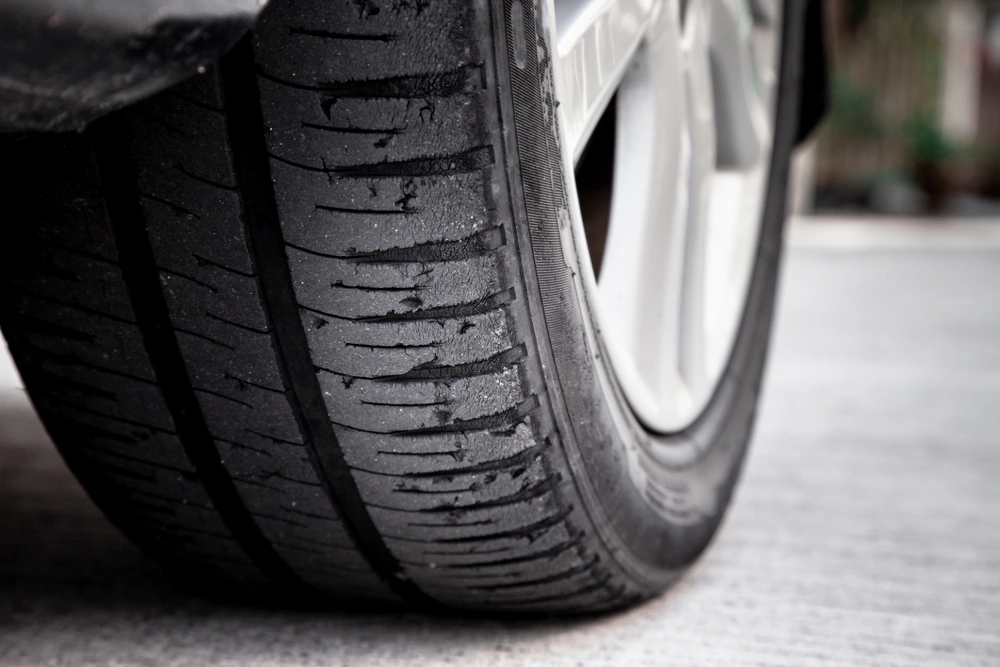
Knowing the warning signs of worn or unsafe tyres helps drivers act before there is a serious problem. Mechanics recommend regular visual checks combined with attention to how the car feels on the road, so issues are picked up early. There is no single signal that suits every situation. Instead, drivers should look for a combination of tread wear, age, damage and changes in handling or braking. If in doubt, it is safer to have the tyres inspected by a qualified technician.
Tread depth is one of the clearest indicators. In Australia, the legal minimum tread depth is 1.5 mm across the central three-quarters of the tyre, but performance and safety start to drop well before that.
A simple way to check is to look at the tyre’s built-in tread wear indicators. These are small raised bars that sit in the grooves between the tread blocks. If the tread is worn down so it is level with these bars, the tyre is at or close to the legal limit and should be replaced. Drivers can also use a tread depth gauge for a more accurate reading. Consider replacement when the tread is approaching 2 mm, particularly if the driver often faces wet roads or needs strong braking performance.
If tread wear is uneven, for example, more wear on the inside or outside edge or in patches, this can indicate alignment or suspension problems as well as the need for new tyres.
Not all tyre problems are about tread. Any visible damage can be a reason to replace a tyre rather than repair it.
Cuts, bulges or bubbles in the sidewall are serious warning signs. A bulge usually means the internal structure has been damaged after hitting a pothole or kerb. This type of weakness can lead to a blowout and the tyre should be replaced immediately. Cracks in the sidewall or between tread blocks can be a sign of ageing rubber or long-term exposure to sun and heat. While fine hairline marks may not require urgent replacement, deep or spreading cracks mean the tyre is no longer safe.
Objects like nails or screws in the tread should be checked by a mechanic. Some punctures can be safely repaired, but damage close to the shoulder or sidewall normally means a new tyre is required.
How the car feels on the road can also reveal tyre problems. If the vehicle starts to pull to one side, feels less stable in corners or needs longer distances to stop, it may be due to worn or uneven tyres. Increased vibration through the steering wheel can indicate out-of-balance or damaged tyres. A humming or droning noise that gets louder with speed can also be linked to irregular tread wear.
If any of these changes appear suddenly or worsen, have the tyres inspected promptly so any unsafe tyre can be replaced before it fails on the road.
Worn tyres change how a vehicle grips, steers and stops, especially in emergencies. Many drivers only notice a problem when the car starts to feel “slippery” or takes longer to stop, but by that stage, safety is already compromised. Understanding exactly what worn tyres do to a vehicle helps explain why replacing them on time is so important.
Technicians see daily how tread depth and tyre condition affect braking distances, control in the wet and overall driving comfort. Even if the car still feels mostly fine on dry roads, worn tyres can become dangerous very quickly when conditions change.
Tread depth is critical for clearing water from beneath the tyre. As the grooves wear down, they hold less water and the tyre rides more on top of the surface instead of cutting through it. This reduces friction and increases stopping distances, particularly in the wet.
In an emergency stop, that extra distance can be the difference between a close call and a collision. Independent tests often show that tyres worn close to the legal limit can add several car lengths to braking distance in rain compared with tyres that have healthy tread.
Grip when accelerating and cornering also drops as tyres wear. The car may struggle for traction when pulling away on a wet hill or feel less stable through roundabouts. Drivers often notice increased wheelspin or the traction control light activating more often, which is a clear sign the tyres are not gripping as they should.
As tyres wear, the risk of aquaplaning rises sharply. Aquaplaning occurs when a layer of water builds up between the road and the tyre, so the vehicle effectively glides on water. With a shallow tread, there is simply not enough space for the water to escape.
On a wet highway, a car on worn tyres is more likely to suddenly feel light in the steering or drift sideways if it hits standing water. Even modern stability systems cannot always correct a car that has lost contact with the road. This is particularly risky at higher speeds and for vehicles that carry passengers regularly.
Worn tyres also react less predictably during sudden manoeuvres. Quick lane changes or swerving to avoid hazards can cause the vehicle to slide or understeer because the tyres cannot bite into the road surface effectively.
Safety is the main concern, but performance in everyday driving also suffers as tyres wear. With less cushioning rubber between the car and the road, the ride often becomes harsher and road noise increases. Vibration through the steering wheel can become more noticeable, especially if wear is uneven.
Tyres that are worn or worn unevenly can increase rolling resistance, which may raise fuel consumption. Drivers might need to use more throttle to maintain the same speed, slowly adding to running costs.
Finally, once tread is low, the remaining rubber heats up more and is more vulnerable to punctures and blowouts. Sharp objects penetrate more easily and the structure of the tyre is less protected.
Tyres do not have a simple use-by date, but there are clear guidelines that help drivers know when they are no longer safe. Check both the age of the tyre and the remaining tread depth so problems are picked up before they become dangerous or illegal on roads. In NSW, drivers are legally responsible for keeping tyres above the minimum tread requirement. If tyres fall below this limit, it can lead to fines, defect notices and a much higher risk of losing control in wet conditions or emergencies.
Most quality passenger car tyres last around 40,000 to 60,000 km under normal driving and maintenance. However, this can vary a lot depending on how and where the vehicle is driven. City stop-start driving, tight cornering, towing heavy loads and aggressive acceleration or braking will wear tyres out well before a car that mostly cruises on the highway.
Time also matters. Even if the tread still looks good, the rubber hardens and cracks with age. Most major manufacturers advise a professional inspection from 5 years of age and replacement by 10 years at the latest, even if the tread is not worn out. The manufacturing date is moulded into the sidewall in a four-digit DOT code. For example, 2319 means the tyre was made in the 23rd week of 2019. Technicians check this date whenever tyres are inspected or rotated.
Regular rotation, alignment and maintaining the correct tyre pressure can extend tyre life. Uneven wear on one edge or in the centre is often a sign that pressure or alignment is incorrect and that the tyre may need earlier replacement.
The legal minimum tread depth is 1.5 mm across the tyre in the areas that contact the road. This applies to all main grooves around the central three-quarters of the tread width and the full circumference of the tyre.
Tyres have built‑in tread wear indicators, which are small raised bars running across the grooves. When the surrounding tread wears down to the level of these bars, the tyre is at or very close to the legal limit and should be replaced straight away. If any part of the tyre drops below 1.5 mm, the tyre is considered unroadworthy even if other areas still have more tread.
For everyday driving, especially in wet conditions, many safety experts recommend replacing tyres when the tread gets down to around 3 mm. Below this level, braking distances increase significantly on wet roads and the risk of aquaplaning rises.
Tread depth is not the only legal requirement in NSW. A tyre can also be unroadworthy if it has exposed cords, deep cuts, bulges or sidewall damage. Mixing very different tread patterns or sizes on the same axle can also affect handling and may raise issues during a roadworthy inspection.
During a service, technicians check tread depth across the whole tyre, look for damage and confirm the tyres are suitable for the vehicle and its typical loads, so drivers leave knowing they are compliant and as safe as possible.
Buying new tyres does not need to be confusing or stressful. When drivers know what to expect, they can budget more accurately, ask the right questions and leave the workshop with more confidence in how their car will perform. In most cases, the process is straightforward, from discussing suitable tyre options to completing the final fitting and safety checks.
The visit usually starts with a quick discussion about how and where the vehicle is driven. Mechanics will look at the current tyres, check sizes on the sidewall and confirm the manufacturer specifications for load and speed ratings. This ensures any new tyres are legal and suitable for the vehicle.
They will typically provide a few clear options at different price points, such as a value choice, a mid-range option and a premium tyre. Staff will explain the trade-offs for each, such as expected tyre life, grip in wet weather, road noise and ride comfort. Drivers can also ask about fuel-efficient patterns or tyres suited to heavy loads or regular highway use.
Once tyres are chosen, the vehicle is moved into the workshop and lifted safely. Old tyres are removed from the rims and inspected for unusual wear that might suggest an alignment or suspension issue. This is often the point where staff can show drivers the inside of the old tyre and explain what caused the wear pattern.
New rubber valves or valve cores are usually fitted to help prevent slow leaks. The new tyres are then mounted on the rims using a tyre machine, so there is no damage to the wheels or sidewalls.
Wheel balancing is the next step. Small weights are attached so each wheel spins evenly, reducing steering vibration and uneven wear. A good workshop will always include balancing with any new tyre fitment.
Keeping an eye on your tyres isn’t just about ticking off another maintenance task; it’s about protecting your safety, your passengers and your wallet. You’ve seen how tread depth, uneven wear patterns, cracks, bulges, age and changes in handling or braking are all warning signs that your tyres are no longer doing their job properly. Ultimately, your tyres are the only part of your vehicle that actually touches the road and their condition has a direct impact on every trip you take. If you’ve noticed any of the signs or you’re simply unsure where your tyres stand, it’s better to check now than to wait until something goes wrong.


.webp)
.webp)