


6 Common Tyre Issues That Cause Pink Slip Failures
February 23, 2026
Keeping a vehicle roadworthy is about more than passing a quick visual check. When it comes to pink slip inspections in NSW, tyre condition is one of the most common reasons cars fail. Kar Pro Tyre & Auto sees motorists caught out by issues they did not realise were serious enough to stop a pink slip from being issued. Understanding how tyres in Campsie are assessed during an eSafety check helps drivers avoid unexpected knockbacks, extra visits and costly last-minute replacements.
Technicians walk through six of the tyre problems that most frequently lead to pink slip failures. Readers will learn how tread depth, uneven wear, damage, age, incorrect sizing and tyre mismatches are viewed under roadworthy standards and why inspectors cannot ignore them. Motorists will know which warning signs to look for before booking their inspection, how to reduce the risk of a failed pink slip and how proactive tyre maintenance supports safer, more predictable on-road performance.
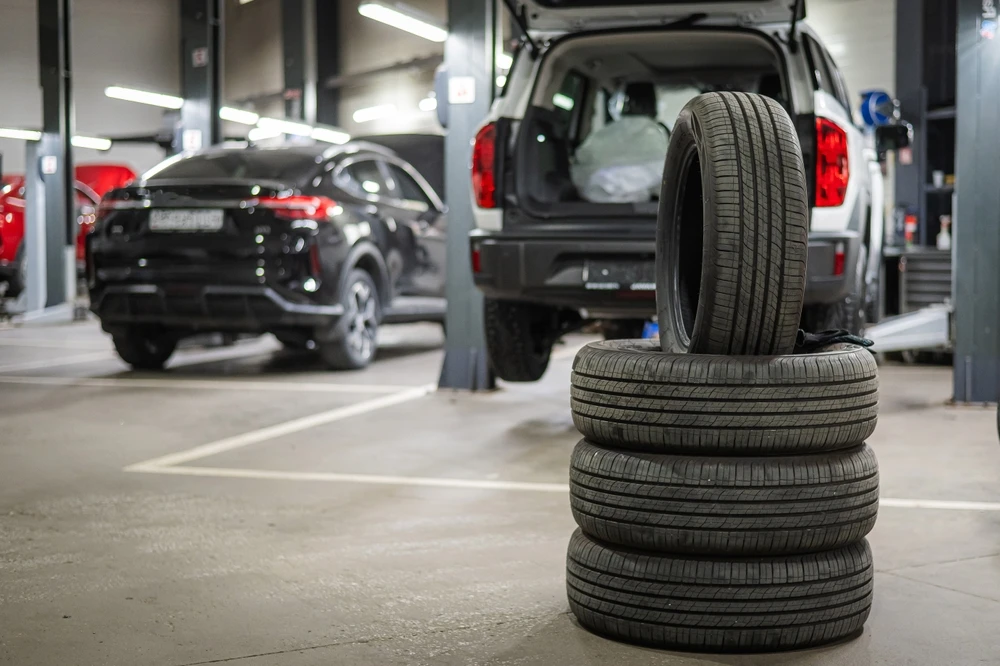
Tyres are one of the first things inspectors look at during a pink slip because they directly affect how safely a vehicle can steer, brake and grip the road. Even if the engine is running perfectly, a car with worn or damaged tyres can be dangerous and is unlikely to pass a safety inspection.
During a pink slip check, technicians must confirm that each tyre meets minimum legal and safety standards. If any tyre fails to meet those standards, the pink slip will usually be rejected until the problem is fixed and the vehicle is rechecked.
Tyres must meet specific roadworthy rules set out in state legislation and inspection guidelines. Inspectors are required to check that:
If any tyre is below the legal tread limit or structurally unsafe, it is an automatic reason for pink slip failure. This applies to the spare tyre too; if it is a space saver, it must still be in a safe, usable condition.
Professional technicians will also confirm that the tyres are of an appropriate type for the vehicle. For example, not using off-road tyres on a standard passenger car, as they compromise braking or handling on sealed roads.
Tyres are the only contact point between the vehicle and the road, so their condition has a huge impact on braking distance and control. During a pink slip inspection, the focus is on whether the tyres will perform safely in real driving conditions, especially in the wet.
Low tread depth reduces the tyre’s ability to disperse water, increasing the risk of aquaplaning and longer stopping distances. Uneven wear can indicate alignment or suspension issues that affect how the car tracks in a straight line or responds in an emergency stop. Inspectors pay close attention to:
If a vehicle pulls to one side during braking or shows severe uneven wear, it raises concerns that go beyond the tyres themselves and can still lead to a failed inspection until corrected.
During a pink slip, technicians also check that the tyres are correctly fitted and suitable for the vehicle. This includes confirming:
Tyre pressure is not the only factor, but severely underinflated or visibly distorted tyres will be flagged since they can overheat and fail on the road. By checking these details, professionals help ensure the vehicle remains safe and predictable to drive between inspections, not just on the day of the test.
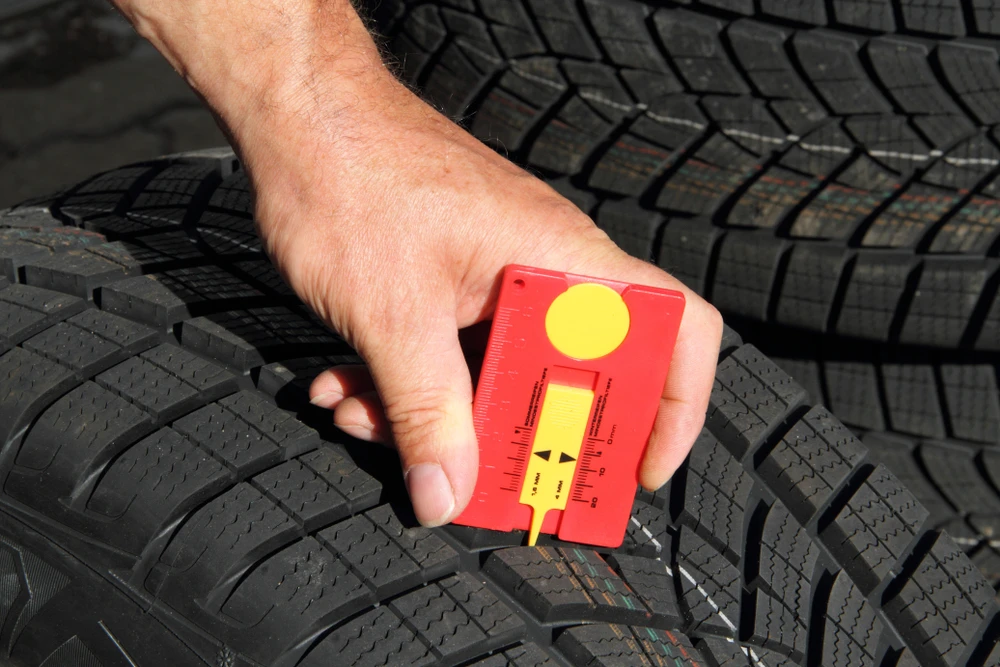
Tyres that are worn below the legal tread depth are one of the most common reasons a vehicle fails its pink slip inspection. Inspectors focus closely on the tread because it directly affects stopping distance, grip in wet conditions and overall safety. If even one tyre is below the minimum standard, the vehicle will not pass until the problem is rectified.
In Australia, the legal minimum tread depth is 1.5 mm across the central three-quarters of the tyre that makes contact with the road. Technicians recommend replacing tyres well before they reach this limit to avoid potential failures and unsafe driving conditions.
During a pink slip inspection, the examiner will visually assess each tyre, then measure the tread where needed. They will look across the full width of the tread and around the entire circumference to make sure there are no bald patches or unevenly worn areas that drop below 1.5 mm.
Most modern tyres have built-in tread wear indicators. These are small raised bars that sit in the grooves of the tread. When the surrounding tread wears down to the level of these bars, the tyre is at or very close to the legal limit. If these indicators are flush with the tread, an inspector is likely to fail the tyre. Technicians also use tread depth gauges for a precise reading, especially if a tyre looks marginal.
It is important to remember that the minimum depth must be met across the main contact area, not just at one spot. If some sections are above 1.5 mm but other parts have worn lower, the tyre is still considered unroadworthy.
Tyres below the legal tread depth reduce the safety of the vehicle. With shallow tread, there is less ability to clear water from under the tyre, increasing the risk of aquaplaning in the wet. Braking distances become longer and the car is more likely to skid or lose traction, particularly in emergency stops or on corners.
Low tread also affects performance on dry roads. The tyre can overheat more easily and is more prone to punctures because there is less rubber between the road and the inner structure. Pink slip standards are designed to prevent these hazards, which is why inspectors take tread depth so seriously.
Regularly checking tread depth is the simplest way to avoid pink slip problems. Drivers can use the tread wear indicators as a quick visual guide or insert a tread depth gauge into the grooves at several points across each tyre. Technicians advise booking an inspection or rotation service once the depth is around 2 to 3 mm, so there is time to plan a replacement before the next pink slip is due.
Keeping tyres correctly inflated and rotating them at recommended intervals helps them wear more evenly, which means they stay above the legal limit for longer. If a tyre shows rapid wear, it is sensible to have experts check wheel alignment and suspension before it leads to a failed inspection.
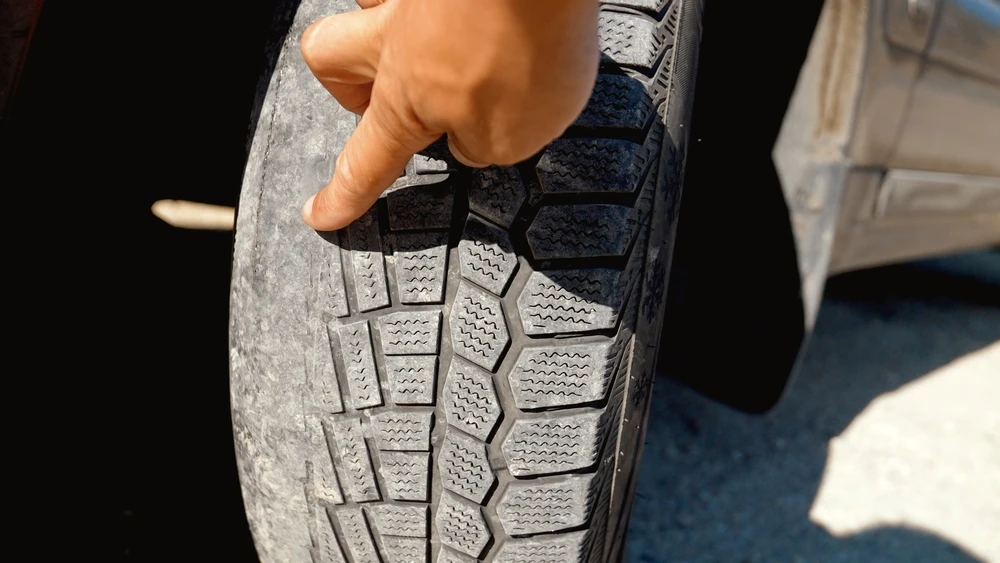
Uneven or abnormal tyre wear is one of the most common tyre problems that will cause a pink slip failure. Inspectors look closely at how evenly the tread is wearing across each tyre because patchy or one‑sided wear usually points to a safety or alignment issue that needs attention before the vehicle can be passed.
Experts notice cars with plenty of tread in some areas but bald or feathered patches in others. Even if the remaining tread depth is technically legal, irregular wear can affect grip, especially in wet weather, increase stopping distances and lead to unpredictable handling, which is why it can result in a failed inspection.
Uneven wear can show up in several typical patterns that are easy for drivers to spot between services:
Any of these patterns can be a reason to fail a pink slip if they are advanced enough to compromise traction or expose the canvas or steel belts.
Uneven wear usually points to an underlying mechanical or maintenance problem. The most frequent causes include incorrect wheel alignment, particularly excessive toe-in or toe-out and poor camber settings. This often leads to inner or outer edge wear and can also cause the car to pull to one side.
Incorrect tyre pressure is another major factor. Overinflation tends to wear the centre of the tread faster, while underinflation pushes more load onto the shoulders and wears the edges. Suspension issues, such as worn shock absorbers, struts or bushes, can cause cupping or scalloping as the tyre bounces instead of staying planted on the road. Worn or loose steering components can have a similar effect and will usually be flagged by the inspector as a separate safety defect.
Driving habits and conditions contribute as well. Regular hard cornering, mounting kerbs, frequent potholes and speed humps taken too fast all increase the risk of misalignment and abnormal wear, which can be picked up during the pink slip check.
To reduce the chance of a pink slip failure from uneven wear, technicians advise checking tyre pressures at least monthly and before long trips using the placard in the door jamb or the owner's manual as a guide. Rotating tyres at regular service intervals helps even out natural wear differences between front and rear positions, especially on front-wheel-drive vehicles.
If any unusual wear pattern is spotted, the vehicle should be booked for a wheel alignment and suspension check rather than simply fitting new tyres. Correcting alignment and replacing worn suspension or steering parts early extends tyre life and helps ensure the vehicle is ready to pass its next pink slip inspection.
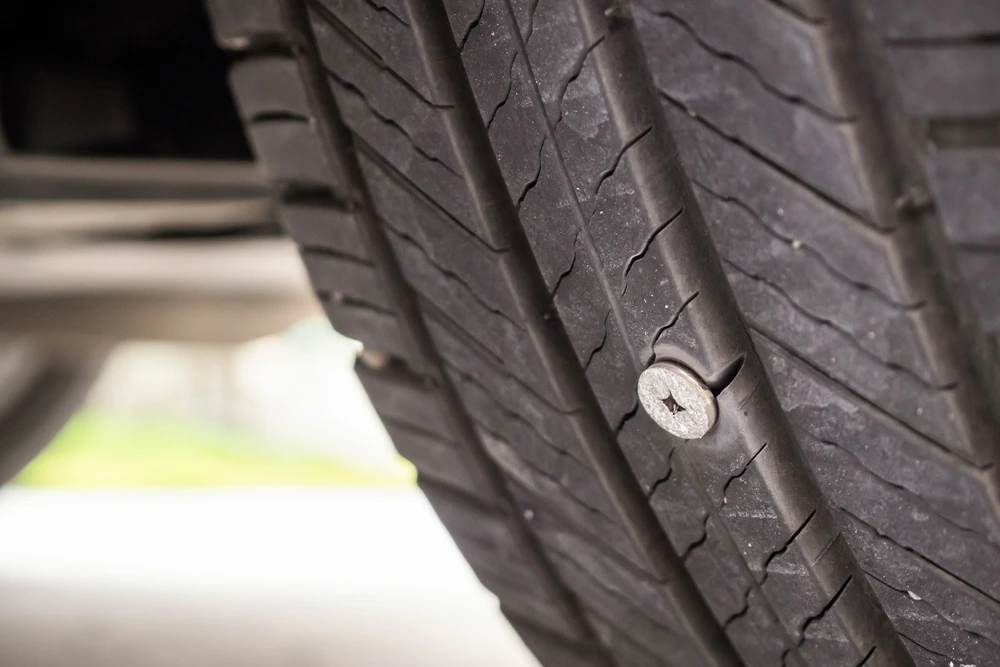
Visible damage to tyres is one of the fastest ways to fail a pink slip inspection. Inspectors look closely for cuts, bulges and exposed cords because these are clear signs the tyre structure has been weakened and could fail without warning. Knowing what to look for helps drivers fix problems early instead of being surprised on inspection day.
Technicians check the outside and inside sidewalls as well as the full tread area. Many defects are easy to miss unless the wheel is turned on full lock or the vehicle is raised, so regular professional checks are important.
The sidewall is a critical part of the tyre. Any serious damage here is almost always an automatic fail. Deep cuts from gutter strikes or road debris can reach the cords inside the tyre, which compromises strength and makes a blowout more likely. As a guide, if a cut is deep enough to see fabric or steel cords, the tyre is no longer roadworthy.
Fine surface cracking on older tyres can also be a problem. Heat and UV exposure cause rubber to dry out and crack. If cracking is widespread or deep enough to catch a fingernail, an inspector may consider the tyre unsafe. A bulge or bubble on the sidewall is even more serious. This usually means the internal cords have broken, so only a thin layer of rubber is holding air.
Inspectors look for physical damage across the tread face as well as the remaining tread depth. Embedded objects, such as screws or nails, are not automatically a failure if repaired correctly, but a slow leak or unrepaired puncture will be. Any gash that exposes cords or separates tread blocks is grounds for rejection.
Chunking, where pieces of tread have broken away, can occur on heavily loaded vehicles or those driven on rough roads. This reduces grip and can let water sit in damaged areas, which speeds up deterioration. Tread lifting or delamination is particularly serious and will fail a pink slip.
Any visible fabric or steel cords are an instant fail regardless of where they appear on the tyre. Exposed cords mean the protective rubber layer has worn or torn away, and the tyre has lost much of its designed strength. Driving on tyres in this condition is extremely risky, even at low speeds.
Poor or unsafe repairs can also cause issues during inspection. Plugs pushed in from the outside without a proper internal patch are not considered a permanent repair. Likewise, any repair in the sidewall or shoulder area is not roadworthy. Technicians only carry out repairs that meet Australian standards and advise when a tyre is too damaged to repair and must be replaced before a pink slip can be issued.
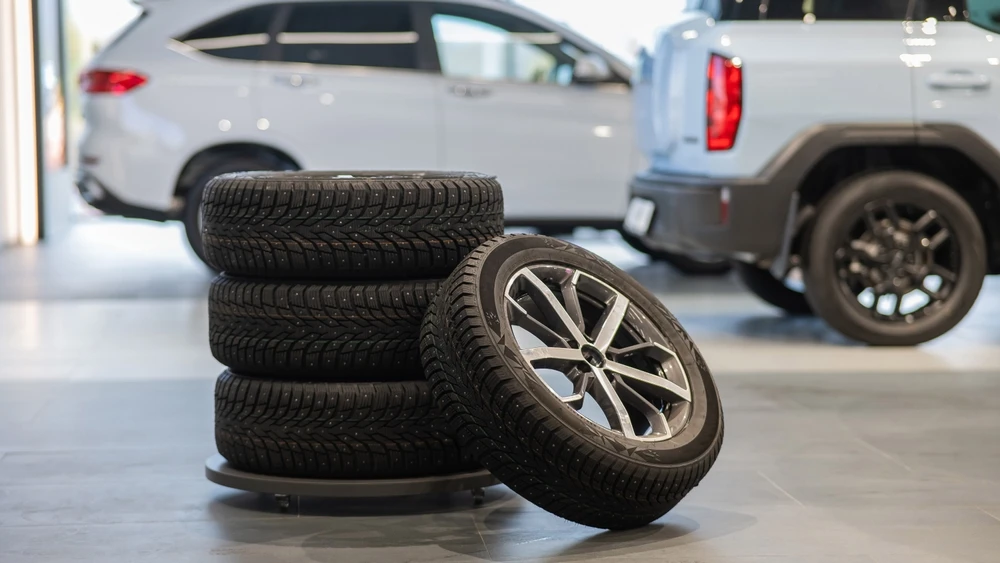
Incorrect tyre size or the wrong load or speed rating is a very common reason for pink slip failures. Inspectors check that the tyres fitted to a vehicle match legal requirements and are suitable for that particular car or 4WD. If any tyre does not meet the specifications, it can be an immediate fail, even if the tread looks fine.
Technicians see vehicles fitted with cheaper or mismatched tyres that do not meet the placard specifications on the driver’s door jamb. This affects safety, handling and braking and can also cause problems with insurance after a crash.
Every tyre has a code on the sidewall, such as 205/55R16 91V. Each part must be suitable for the vehicle.
The tyre size must be appropriate for the wheel and the vehicle. If the overall diameter is too large or too small compared to factory specifications, it can affect speedometer accuracy, ABS, traction control and clearance in the guards. In many cases, there are strict limits on how much larger or smaller you are allowed to go for a roadworthy vehicle.
The load index indicates how much weight each tyre can safely carry. If the fitted tyres have a lower load index than specified on the vehicle placard, the car can fail its pink slip even if the tyres are new. This is important for SUVs, vans and utes that regularly carry tools or tow.
The speed rating shows the maximum speed the tyre is built to handle under load. Inspectors check that the rating meets or exceeds the minimum required for that vehicle. Using tyres with a lower speed rating than specified is a common reason for knockbacks during inspections.
Using the wrong size or rating is not just a paperwork issue. It directly impacts safety. Underrated or oversized tyres can lead to:
If a crash occurs and the vehicle is found to have incorrect tyres, an insurer may question the claim due to the car being unroadworthy. Pink slip inspectors are trained to look at the placard and then compare it to what is actually fitted.
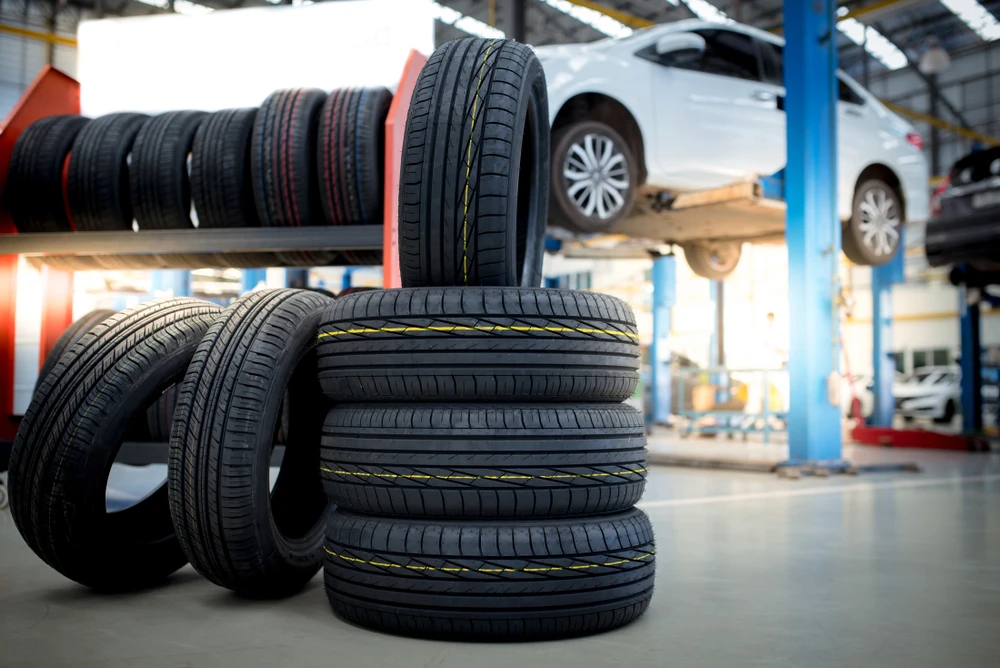
Mixed or mismatched tyres on the same axle are a common reason vehicles fail a pink slip inspection. Inspectors look for consistency across each axle because uneven tyres affect braking, steering and stability, especially in emergencies. If the front or rear pair do not match in key areas, the vehicle can be deemed unroadworthy.
Technicians regularly see vehicles knocked back for simple issues like one odd tyre fitted after a puncture. Understanding what “mismatched” really means helps drivers avoid an avoidable pink slip failure.
Tyres do not need to be the identical brand and model in every case, but they must be compatible. On the same axle, inspectors typically check that tyres:
If one tyre is wider, taller or a different profile, it can change the rolling diameter and contact patch. This affects how the car sits on the road and can confuse stability and ABS systems. Large differences in tread pattern can also be flagged.
On the road, the car relies on each tyre on an axle behaving the same way. When one responds differently, the vehicle can pull to one side under braking or feel unstable when cornering.
A few practical issues that arise with mismatched tyres are:
Modern vehicles with traction control and ABS are calibrated for matching tyres. If one wheel turns slightly faster due to a different rolling diameter, the system may think it is slipping and intervene unnecessarily.
The simplest way to avoid problems is to keep each axle matched as a pair. When replacing a damaged or worn tyre, experts propose:
If only one tyre absolutely must be changed, it’s advised to fit the closest possible match and to rotate tyres so the best-matched pair sits on the front axle, where steering and braking demands are highest.
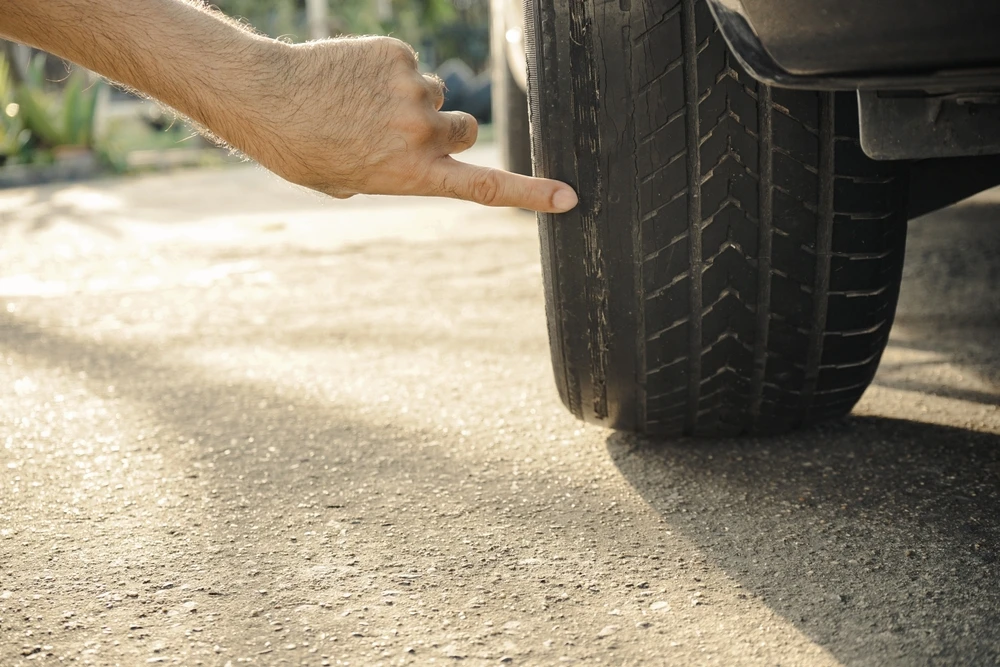
Even if tread depth looks legal, tyres can fail a pink slip simply because they are too old. Rubber hardens and breaks down, eventually, reducing grip and increasing the risk of sudden failure. Experts see vehicles knocked back at inspection, not for worn tread, but for tyres that are beyond a safe service life.
Age-related deterioration is a quiet problem because it happens gradually. A car that is driven very little, such as a second vehicle or a caravan, can actually have more age damage than a daily commuter. Inspectors look at both the visible condition and the manufacturing age code on the sidewall to decide if a tyre is still roadworthy.
Most manufacturers recommend replacing tyres at 6 to 10 years old at the latest, even if the tread appears fine. In practice, many pink slip inspections will flag tyres that are 8 years or older or that show any clear age damage.
Inspectors combine this age information with what they see on the tyre. A relatively young tyre with obvious cracking can still fail, while an older tyre that is right on the limit of age and also shows hardening or minor cracks will almost certainly be rejected.
Age-related problems usually show up before a complete failure. Typical signs include:
Motorists often mistake UV and weather cracking for minor cosmetic wear. In reality, these are signs that the rubber compound is no longer performing as designed and the internal cords may also be under stress.
Drivers can reduce the risk of an age-related failure by checking tyre dates whenever they buy a vehicle or new tyres and by having tyres inspected annually once they reach 5 years old. Keeping the car garaged where possible, limiting long-term parking in full sun and maintaining correct pressures all help slow deterioration, but do not remove the need for eventual age-based replacement.
Plan to replace older tyres before the pink slip is due, rather than waiting for an inspection fail. This avoids last-minute stress and, more importantly, keeps the vehicle safe in everyday driving.
Before a pink slip inspection, it is worth doing a quick tyre check at home. This can help pick up simple problems early and give time to fix issues that would otherwise cause a defect. Set aside 10 to 15 minutes and check each tyre in the same way so nothing is missed.
A basic pre-inspection check focuses on four key areas: tread depth, tyre condition, air pressure and age. None of this requires special tools, although a cheap tread depth gauge and a tyre pressure gauge make the job more accurate.
In NSW, passenger vehicles generally need at least 1.5 mm of tread across the full width of the tyre that contacts the road. If the tread drops below this, the vehicle is likely to fail the pink slip.
Start by turning the steering wheel full lock to one side so the front tyres are easy to see. Look for the built-in tread wear indicators inside the grooves. These are small raised bars that run across the tyre. If the tread is worn down to the same level as these bars in any main groove, the tyre is at or below the legal limit and needs replacing.
Check three points across each tyre’s inner edge, centre and outer edge. Uneven wear, such as bald inner edges with good tread in the centre, is a common reason for inspection failures and usually points to alignment or suspension issues.
Inspect each tyre sidewall from top to bottom, inside and outside if possible. Any cut that exposes cords, deep cracks or visible fabric will usually mean a fail. Run a hand lightly over the sidewall to feel for bubbles or bulges that suggest internal damage. A single bulge is enough for an inspector to deem a tyre unsafe.
Next, inspect the tread area for nails, screws or embedded objects. If something is found, do not pull it out. Instead, note which tyre it is and have it checked for repair. Also, look for flat spots or areas where the tread looks scrubbed or feathered, which can indicate problems with alignment or incorrect pressure.
Correct pressure is important for safe braking and even wear. Use a quality pressure gauge when the tyres are cold, ideally before driving far. Compare readings with the placard on the driver's side door jamb or the vehicle handbook. If pressure is low on one tyre, it may indicate a slow leak that should be checked before the inspection.
Finally, check the age of each tyre. On the sidewall, there is a four-digit DOT date code. For example, 2319 means the tyre was made in the 23rd week of 2019. While age alone might not automatically fail a pink slip, tyres older than around 6 to 10 years often show cracking and hardening that can be picked up during inspection.
Every one of these common tyre issues has the potential to turn a routine pink slip inspection into a failed one. More importantly, they all represent genuine safety risks long before they show up on a report. By keeping an eye on your tyres between inspections, acting early and having your vehicle checked, you can avoid unnecessary pink slip failures, unexpected costs and dangerous situations on the road.


.webp)
.webp)