


5 Common Tyre Myths That Could Cost Drivers Money or Safety
July 13, 2026
Tyres play a critical role in vehicle safety, yet many drivers still rely on outdated or misleading information that can result in unnecessary expenses, premature wear and increased risks on the road. Drawing on industry experience, Kar Pro Tyre & Auto helps motorists better understand how tyres in Campsie perform so they can recognise problems early and make more informed maintenance decisions.
This article examines five common tyre myths and explains the facts behind tyre pressure, tread depth, wheel alignment and tyre quality. By separating reliable advice from common misconceptions, drivers can protect their tyres, improve vehicle performance and stay safer in everyday conditions.
A tyre does not need to look visibly flat to be underinflated, damaged or unsafe. Modern radial tyres can remain rounded even when their pressure has fallen below the vehicle manufacturer’s recommendation.
This means a tyre may appear normal during a quick visual inspection while still affecting braking, handling, fuel consumption and tread life. Checking only whether a tyre is holding air can allow smaller problems to develop into expensive repairs or roadside failures.
When a tyre is underinflated, its sidewalls flex more than intended as the vehicle moves. This creates additional heat and places greater stress on the tyre’s internal structure.
Underinflation can contribute to:
A tyre that is regularly driven below the recommended pressure may wear out considerably sooner than expected. Because the pressure loss is not always visible, motorists should use a reliable gauge rather than relying on appearance alone.
Tyre pressure should generally be checked at least once a month and before long journeys, towing or carrying heavy loads.
Tyres can also deteriorate even when they have plenty of tread and continue to hold air. Rubber gradually hardens as it ages and may become more vulnerable to cracking, particularly when exposed to sunlight, heat and long periods of inactivity.
Small cracks around the tread or sidewalls do not always mean immediate failure, but they should be inspected by a tyre professional. Deep cracking, exposed cords or significant deterioration may indicate that the tyre is no longer suitable for continued use.
Drivers should also check the tyre’s age by locating the manufacturing code on the sidewall. Tyre condition, usage and storage are more important than age alone, but older tyres may require closer inspection.
A bulge or bubble on the sidewall usually indicates damage to the tyre’s internal structure. This often occurs after the tyre strikes a pothole, kerb or other road hazard.
Although the tyre may remain inflated, a sidewall bulge means its internal reinforcement may have been weakened. The affected area can fail suddenly under heat, speed or load.
Tyres with visible bulges should not be ignored or repaired with a temporary patch. They should be professionally inspected and usually replaced as soon as possible.
Regular visual checks for cracks, cuts, bulges, embedded objects and uneven wear can help identify damage before it leads to a breakdown.
Many drivers assume that a tyre must be performing properly as long as it remains above the legal tread limit. In reality, the legal limit is a minimum roadworthiness requirement, not a measure of optimal braking, grip or wet-weather performance.
In NSW, tyres must have at least 1.5 mm of tread across the surfaces that normally contact the road. However, tyre performance may begin to decline before the tread reaches this minimum, especially during heavy rain or emergency braking.
The grooves in a tyre’s tread are designed to move water away from the contact patch, allowing the rubber to remain in contact with the road.
As the tread becomes shallower, the tyre has less capacity to clear water. This can reduce wet-weather grip and increase the likelihood of aquaplaning, particularly at higher speeds or when water has collected on the road.
Worn tyres may also provide:
A tyre may therefore remain technically legal while no longer delivering the level of wet-weather performance it provided when it was newer.
Some tyre manufacturers and motoring organisations suggest considering replacement at around 3 mm to preserve stronger wet-weather performance. This is not the legal replacement point, and the appropriate timing depends on the tyre, vehicle, driving conditions and usage.
Drivers who regularly travel on highways, carry heavy loads or drive in wet conditions may choose to replace their tyres before they reach the legal minimum. A tyre professional can assess the remaining tread and help determine whether continued use is appropriate.
Most tyres have tread wear indicators built into their main grooves. These appear as small raised bars across the tread.

When the surrounding tread becomes level with these indicators, the tyre is generally at or near the minimum allowable tread depth and should be replaced.
A tread depth gauge provides a more accurate measurement and allows drivers to compare different areas of the tyre. Measurements should be taken at several points because wear is not always even.
Uneven tread may indicate:
A tyre with good tread in the centre may still be unsuitable if one shoulder has worn below the legal limit.
Tyre pressure affects vehicle safety, fuel economy, handling and tyre life during every journey, not only before long-distance travel.
Tyres naturally lose small amounts of air over time. Pressure can also change due to temperature fluctuations, small punctures, leaking valves or damage caused by potholes and kerbs.
Without regular checks, a gradual pressure loss may become severe enough to affect how the vehicle grips and responds.
For most passenger vehicles, tyre pressure should be checked at least once a month. It should also be checked before:
A consistent monthly check helps identify slow leaks before they develop into flat tyres or cause excessive tread wear.
Tyre pressure should be measured when the tyres are cold. This generally means the vehicle has been parked for several hours or has only travelled a short distance at low speed.
Driving generates heat, which temporarily increases tyre pressure. If air is released from a warm tyre to match the cold-pressure recommendation, the tyre may become underinflated once it cools.
When a cold check is not possible, motorists should avoid making large adjustments unless there is an obvious pressure problem. The pressure can then be checked again once the tyres have cooled.
Driving conditions around Campsie and greater Sydney can expose tyres to changing temperatures, congested roads, potholes and kerb impacts.
Cold mornings may lower tyre pressure, while warm road surfaces and stop-start traffic can increase tyre temperature. These normal changes are another reason pressure should be measured consistently under similar conditions.
Both underinflation and overinflation can cause problems.
Underinflation may lead to:
Overinflation may lead to:
Adding extra pressure without checking the manufacturer’s recommendation does not automatically improve fuel economy or tyre life.
The correct pressure is based on the vehicle manufacturer’s specifications, not the maximum pressure printed on the tyre sidewall.
The recommended pressure is usually listed:
The placard may provide separate recommendations for normal driving, heavy loads or towing. Drivers should use the setting that matches how the vehicle is currently being used.
After carrying an unusually heavy load or towing, the pressure should be returned to the normal setting when the additional weight is removed.
A vehicle pulling to the left or right can indicate poor wheel alignment, but it is not the only warning sign.
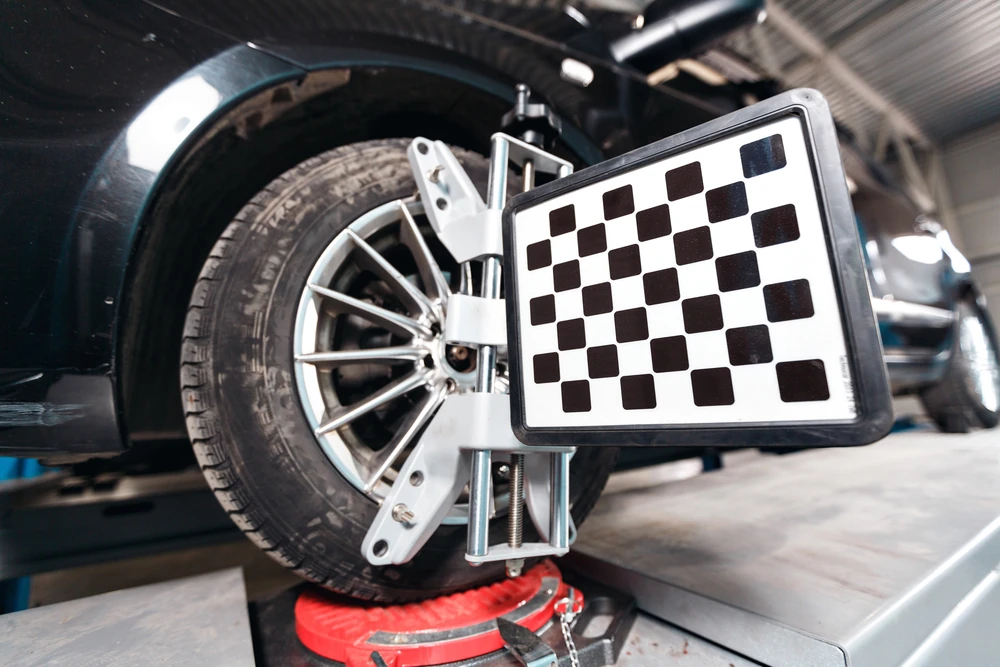
Some alignment problems allow the vehicle to travel in a relatively straight line while the tyres continue to scrub against the road. This can quietly shorten tyre life, increase rolling resistance and reduce the consistency of the vehicle’s handling.
Wheel alignment involves adjusting suspension and steering angles to match the vehicle manufacturer’s specifications. These angles include camber, toe and caster.
Even small deviations can change how the tyres contact the road.
A vehicle may need an alignment inspection even if it does not noticeably pull to one side.
Possible warning signs include:
Vibration can sometimes occur alongside alignment problems, although it is more commonly associated with wheel balancing, damaged tyres or worn suspension components. A professional inspection may be needed to identify the exact cause.
When wheels are not pointing in the correct direction, the tyres may drag or scrub across the road instead of rolling smoothly.
This can cause one shoulder of the tyre to wear much faster than the rest. In some cases, a tyre may need to be replaced because one section has reached the legal limit while the remaining tread still appears serviceable.
Misalignment can also increase rolling resistance, making the engine work harder to move the vehicle. Over time, this may contribute to higher fuel consumption.
If the underlying cause is not corrected, newly fitted tyres can quickly develop the same uneven wear pattern.
Alignment affects the shape and consistency of each tyre’s contact patch. When a tyre is tilted or pointing slightly away from its intended direction, its grip may become less predictable.
Unevenly worn tyres can reduce stability during:
Vehicle safety systems such as ABS and electronic stability control work most effectively when all four tyres provide consistent grip.
Drivers should consider having their wheel alignment checked after a strong pothole or kerb impact, when uneven tyre wear appears, when steering behaviour changes or when new tyres are fitted.
A budget tyre may appear to be the most economical choice, especially when replacing several tyres at once. However, the lowest purchase price does not always provide the lowest cost over the tyre’s full lifespan.
Tyre value should be assessed according to more than the price shown at the counter. Drivers should also consider:
A slightly more expensive tyre may offer better value if it lasts longer, performs more consistently or reduces the need for early replacement.
Tyres are made using different rubber compounds, tread designs and construction methods. These differences influence how quickly a tyre wears and how it performs under braking, heat and load.
As a simple example, a lower-priced tyre that wears out much sooner may cost more per kilometre than a longer-lasting mid-range tyre. The driver must also pay for fitting, balancing and disposal each time the tyres are replaced.
A tyre with higher rolling resistance may also contribute to greater fuel use over time. Although the difference on an individual trip may be small, it can become more noticeable across many thousands of kilometres.
This does not mean every inexpensive tyre is poor quality. Reputable budget tyres can be suitable for some drivers, but price should not be the only consideration.
One of the most important differences between tyre models is how they perform in wet conditions.
Tyres that appear similar may provide different levels of:
The safety difference becomes particularly important during emergency braking or sudden evasive manoeuvres.
Independent tyre tests, manufacturer specifications and professional recommendations can help motorists compare options rather than choosing solely by price.
The most expensive premium tyre is not always necessary. Good value comes from choosing a tyre that suits the vehicle, typical driving conditions and budget.
Drivers who mainly travel short urban distances at moderate speeds may find that a reputable budget or lower mid-range tyre meets their needs.
Motorists who frequently travel on highways, carry heavy equipment, tow trailers or drive long distances may gain more value from tyres with stronger construction, longer tread life and better wet-weather performance.
Families, commercial drivers and tradies should also consider how the vehicle is loaded and how often it is used when selecting tyres.
A tyre professional can recommend suitable options based on:
Common tyre myths can lead to premature wear, unnecessary expenses and avoidable safety risks. A tyre does not need to be visibly flat to have a problem, the legal tread limit does not guarantee optimal performance, and wheel alignment issues are not always obvious from the driver’s seat.
Regular pressure checks, visual inspections, tread measurements and professional servicing can help motorists identify problems early and make better use of their tyres.
With practical advice and professional tyre services, Kar Pro Tyre & Auto helps drivers maintain safe, efficient and dependable vehicles. Staying proactive with tyre care remains one of the simplest ways to improve road safety, extend tyre life and avoid preventable costs.


.webp)
.webp)