


Why Does My Automatic Hesitate When I Change Gears?
November 26, 2026
A pause after selecting drive, a jolt between gears or an engine that revs without the expected acceleration can all feel like hesitation. Possible causes include transmission fluid problems, control faults, mechanical wear and engine performance issues. The way the car behaves helps a mechanic decide where to investigate.
For Miranda drivers, Kar Pro Tyre & Auto can assess these symptoms and explain the appropriate next steps. A clear description of what happens and when is more useful than trying to diagnose the fault yourself.
Start by distinguishing a delay in taking up drive from a problem that occurs while the car is already moving.
Delayed gear engagement is a pause between selecting drive or reverse and feeling the transmission take up drive. You might notice it when reversing out of a parking space or moving away after starting the car.
Tell the workshop whether it happens in drive, reverse or both and whether the car is cold or warmed up. A description such as “a noticeable pause, then a bump” is useful. Avoid pressing harder on the accelerator to overcome the delay, as drive could engage abruptly.
Slipping can feel like the engine revving higher without a corresponding increase in road speed. You might notice the revs rise during a gear change while acceleration briefly drops away.
Higher revs alone do not confirm a fault. A normal downshift can raise engine speed, and different transmission designs behave differently. The useful detail is whether the behaviour is new or unexpected, particularly if it comes with reduced drive.
A harsh change feels like a jolt, bang or sudden take-up of drive. Explain whether it happens while accelerating, slowing down or selecting a gear from a standstill. A clunk may involve components outside the transmission, so describe what you feel and hear without assuming its cause.
A conventional automatic, a continuously variable transmission and a dual-clutch transmission operate differently. The workshop needs to identify the transmission fitted to your vehicle before choosing the appropriate checks.
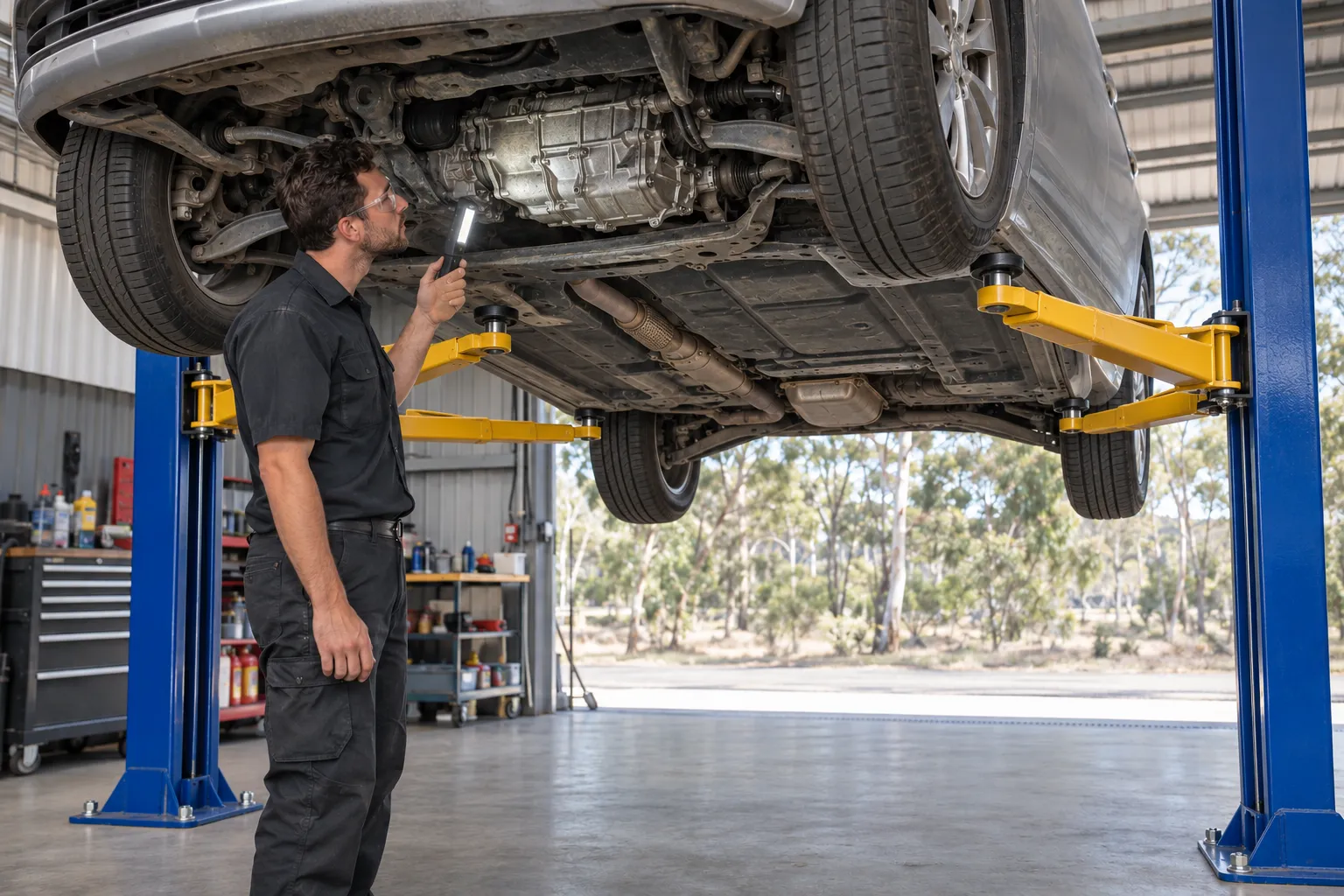
Depending on the transmission design, fluid supports lubrication, cooling and hydraulic operation. An incorrect level, unsuitable fluid or deterioration may affect how the transmission works.
Fluid checks can require specific temperatures and procedures, and specifications are not interchangeable. Leave assessment to a qualified professional rather than adding fluid or assuming a fluid change will fix the hesitation.
If you notice a fresh mark beneath the car, tell the mechanic where it appeared. The source needs to be identified before it can be treated as a transmission leak. Do not go underneath the vehicle to investigate.
Sensors, wiring, actuators and control systems help manage when and how gears engage. Faults in these systems can affect shifting, while internal mechanical wear can produce overlapping symptoms. Electrical checks and operating data may help the mechanic distinguish between them.
An engine that hesitates under load can feel like a gearbox problem. Rough idling, a delayed accelerator response or unusual engine behaviour while stationary are useful details to report. They can help the workshop determine whether the investigation should extend beyond the transmission.
Continued movement does not establish that the car is safe to drive. If it loses drive, slips severely, engages unpredictably or develops a significant fluid leak, stop somewhere safe and arrange assistance. A short distance to the workshop does not remove the risk of an unexpected lurch or failure to accelerate.
Do not repeatedly select gears or rev the engine to force the car to move. Contact roadside assistance or the workshop and explain whether drive and reverse engage reliably. Recovery requirements vary between vehicles, so seek advice on the appropriate towing method.
For a new but milder hesitation, speak to a mechanic before further use. Report any worsening symptoms, burning smell or dashboard warning, and follow the vehicle’s handbook. Mention if the hesitation disappears after restarting or warming up, as this can help with investigating an intermittent fault.
Bring service records and details of recent repairs or fluid changes to the assessment. Understanding what routine car servicing should cover can help you discuss previous maintenance. An overdue service does not automatically explain the hesitation, and a recent service does not rule out a new fault.
When choosing a mechanic Miranda drivers can consult about these symptoms, ask what the initial assessment includes. The findings should establish whether maintenance, a targeted repair or specialist investigation is appropriate. Before booking, you can check a motor vehicle repairer’s licence through Service NSW.
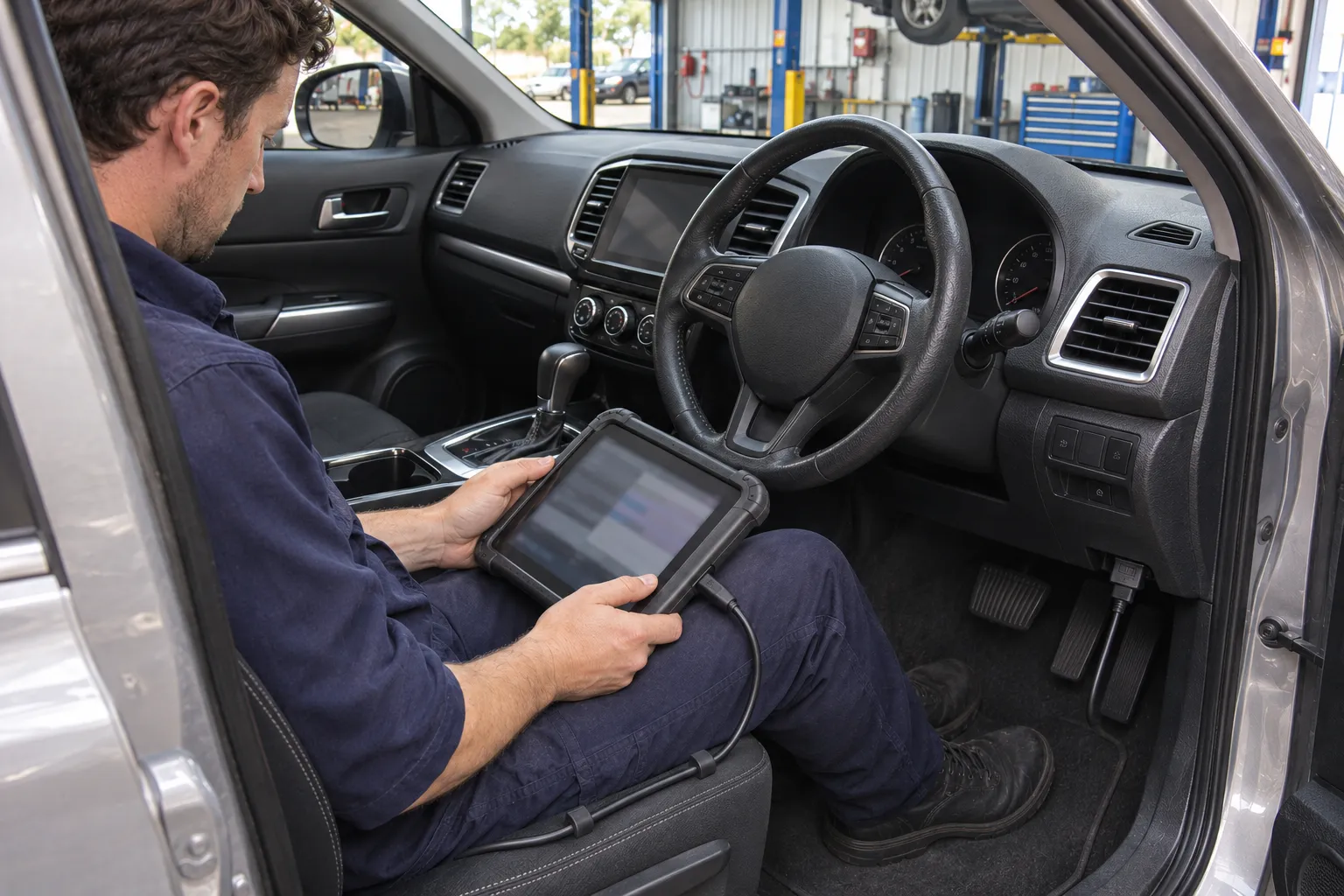
A scan can reveal stored fault codes and operating information from the transmission, engine and related systems. These findings can guide testing, but a code does not necessarily identify a failed component. The same code may have several possible causes.
Some mechanical or intermittent faults may leave no clear electronic record. Your description remains useful, especially if the car behaves normally during the appointment. Make notes once safely parked, including any dashboard message and the circumstances in which the symptom occurred.
Further checks may include inspecting for leaks, assessing fluid and testing relevant electrical or mechanical components. A professional road test may also help if the mechanic considers the vehicle safe to drive. Specialist assessment may be needed where the suspected fault requires additional equipment or expertise.
Kar Pro Tyre & Auto’s automatic transmission service information provides a starting point for discussing maintenance and assessment. When booking, explain that the car has a driving fault rather than simply requesting scheduled servicing.
Before authorising work, ask which findings are confirmed, what further testing will establish and what costs require approval. If a repair is recommended, ask how it addresses the reported symptom, how the result will be checked and whether the car should remain off the road in the meantime.


