


Why Can I Smell Exhaust Inside My Car?
October 28, 2026
An exhaust smell inside your car may come from a leaking exhaust component, outside fumes entering through the ventilation system or openings around the vehicle's body. Sometimes, a fuel or burning-oil smell is mistaken for exhaust. The odour alone cannot identify the cause or establish whether the cabin is safe.
For drivers looking for mechanics in Campsie, Kar Pro Tyre & Auto can be contacted to discuss an assessment and how the vehicle should reach the workshop. Before making that journey, the priority is to stop safely, consider whether anyone needs medical help and seek advice about the next step.
Treat an unexplained exhaust smell inside your car as a reason to stop safely. You do not need to identify a faulty component before taking that precaution.
Vehicle exhaust can contain carbon monoxide, a poisonous gas that has no smell. The exhaust odour you notice comes from other substances, so its strength cannot tell you how much carbon monoxide may be present. A smell that fades does not establish that the air is safe. The NSW Poisons Information Centre explains the risks associated with carbon monoxide, including exposure to vehicle exhaust.
Pull over as soon as it is safe, choose a stopping place away from moving traffic where possible, secure the vehicle and switch off the engine. Move yourself and your passengers into fresh air, away from traffic and fumes, when it is safe to leave the car.

Do not step into a traffic lane or stand behind the vehicle to investigate. If you cannot exit safely, contact roadside assistance or emergency services as appropriate and explain both the traffic situation and the fumes. If someone is unwell or you cannot escape the exposure safely, call 000 and follow the operator's instructions.
Possible symptoms of carbon monoxide exposure include headaches, nausea, vomiting and weakness. If these occur following suspected exposure, move into fresh air when safe and call the Poisons Information Centre on 13 11 26 for advice. If someone is dizzy, fainting or unconscious, call Triple Zero (000). NSW Health provides guidance on carbon monoxide symptoms and getting help. Medical help takes priority over arranging a vehicle inspection.
Avoid restarting the engine to see whether the smell returns. Opening windows may provide ventilation, but neither open windows nor recirculation mode makes continued driving safe. Never run the engine in a garage or another enclosed area to investigate the smell.
Once everyone is safe and any medical needs have been addressed, contact roadside assistance or a qualified mechanic. Explain that the smell was inside the cabin and ask how the vehicle should reach the workshop. Towing may be appropriate, even if the workshop is nearby.
Provide your location, whether the engine is switched off and whether the car is safely clear of traffic. Mention any smoke, unusual noise, warning light or change in performance that you already noticed. These details help the person advising you, but they cannot replace an inspection.
An exhaust smell can involve both a source of fumes and a route into the passenger compartment. A mechanic may need to investigate each rather than looking only at the tailpipe.
Fumes from another vehicle are also possible. A brief odour noticed beside a running vehicle and a recurring smell during your own journeys are useful observations, but neither confirms the cause on its own.
The exhaust system carries gases from the engine towards the rear of the vehicle. A leaking joint or damaged component can release gases before they reach the intended outlet, potentially placing fumes near the engine bay or underneath the cabin.
Possible problem areas include pipe connections, flexible sections and parts affected by corrosion or impact damage. Mountings also hold the system in position, and excessive movement can place strain on adjoining components.
An unfamiliar ticking, puffing or louder exhaust note may accompany a leak. However, the noise depends on the fault's size and location. A quiet exhaust does not prove that every joint is sound, while a louder exhaust does not automatically mean fumes are entering the cabin.
An inspection should establish where gases are escaping and whether that location fits the reported smell. Replacing a visibly worn part without checking related areas may leave another fault unresolved.
The ventilation system draws outside air into the cabin through an intake. Fumes near that intake can enter with the incoming air, which is one reason an assessment may include the engine bay as well as the exhaust underneath the vehicle.
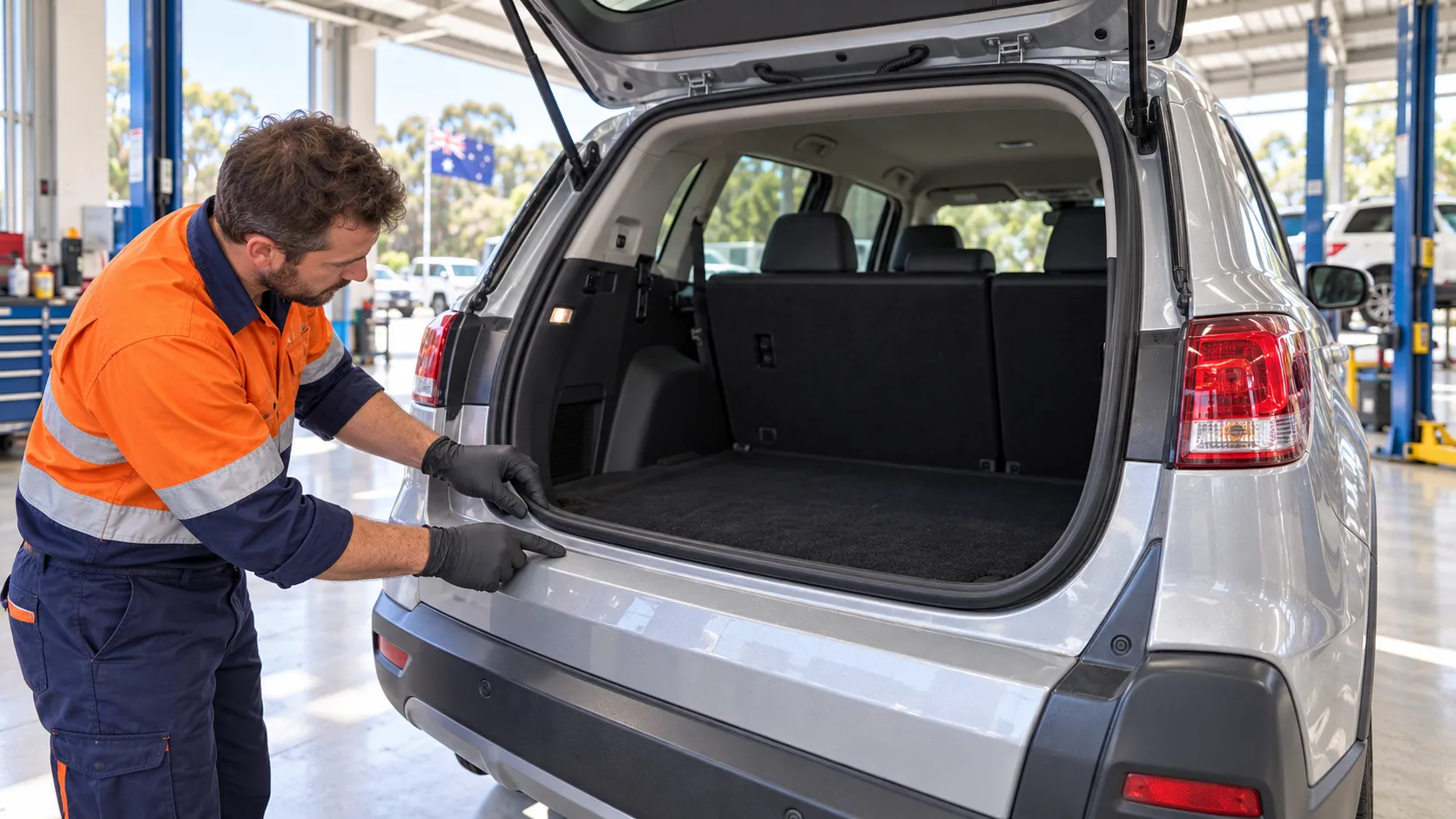
Damaged seals, unsealed body openings or missing plugs can provide other entry paths. Depending on the vehicle, a mechanic may check the floor, rear body, boot or tailgate area and relevant seals. An opening may explain how fumes enter without identifying where they originated.
Slow traffic can change the airflow around a vehicle and make nearby fumes more noticeable. Tell the mechanic whether the smell occurred while stationary, moving slowly or following another vehicle. Report the conditions you remember rather than deliberately repeating the situation.
Plain language is enough. Explain what you noticed and when it happened without trying to name the failed component. Exhaust, raw fuel and burning-fluid odours can be confused, so uncertainty is worth communicating.
An exhaust-like smell may seem smoky or resemble fumes noticed behind a running vehicle. Raw fuel may have a recognisable petrol or diesel odour, while oil contacting a hot surface can produce an acrid burning smell. These descriptions overlap, and people perceive odours differently.
A burning smell may therefore lead a mechanic to investigate fluid leaks near hot components as well as the exhaust system. Neither a fuel smell nor a burning smell should be treated as reassuring simply because it may have a different source.
If unsure, explain that the cabin smelled like exhaust but that you could not distinguish it from fuel or burning oil. That gives the mechanic a useful observation without suggesting a confirmed diagnosis.
Think back to whether the engine was cold or had been running for some time. Note whether the smell appeared at startup, in traffic, while moving or just after parking, and whether it happened once or on several journeys.
Mention any new noise, visible smoke, warning light or change in performance. Recent repair work or an earlier impact may also be relevant, including when the smell began relative to that event. An observation such as “it seemed stronger while stopped” is more useful than an unsupported conclusion about the ventilation system.
Previous service records can help establish the vehicle's history. If earlier inspections identified any issues found during a car service, tell the mechanic which findings remain unresolved rather than assuming they explain the current smell.
Write down these details once safely stopped. There is no need to reproduce the odour or look beneath a running vehicle.
The right repair depends on what the inspection confirms. An exhaust-like smell does not automatically justify replacing a pipe, muffler or seal.
Ask the workshop to explain what it has found, what evidence supports the diagnosis and why the proposed repair addresses the problem. If the fault remains unconfirmed, clarify what further assessment is needed.
A qualified mechanic may check exhaust joints, pipes, flexible sections and mountings for leakage, damage or movement. Nearby fluid leaks and hot surfaces may also need inspection if the odour could come from burning oil or another fluid.
Where necessary, the assessment may extend to ventilation intake areas and body seals or openings. Finding a leaking component and identifying the route into the cabin are related tasks, but repairing one may not resolve the other.
Clarify diagnostic charges, the proposed inspection scope and the approval process before work begins. Understanding how workshop labour charges work can help when discussing an estimate, although the time required depends on the vehicle and fault.
Air fresheners can mask an odour without removing its source. Changing fan speed or ventilation settings may alter how noticeable the smell is, but it does not repair a leaking exhaust or an opening in the body.
Before approving repairs, ask which confirmed faults the work will address and how the workshop will check the result. If both an exhaust leak and a compromised seal are involved, request an explanation of each recommendation. The estimate should distinguish confirmed repairs from any further investigation.
An unexplained exhaust smell inside the cabin warrants prompt attention. Stop safely, move away from fumes when safe and seek medical help if exposure symptoms occur. Once everyone is safe, arrange professional advice about inspection and transport before continuing the journey.
Kar Pro Tyre & Auto can be contacted to discuss the symptoms and arrange an assessment. Explain that fumes were noticed inside the cabin so advice about getting the vehicle to the workshop comes before plans to drive it there.


