


When Your Car's Temperature Climbs in Slow Traffic
October 28, 2026
A temperature gauge that starts climbing in slow Miranda traffic can be unsettling, especially if it returns to its usual position once the road clears. This pattern may indicate that the engine is struggling to shed heat at low speed. The apparent recovery does not necessarily mean the problem has gone away.
If a temperature warning appears, the gauge rises rapidly or steam comes from under the bonnet, the driver should pull over safely, switch off the engine and arrange roadside assistance. The vehicle’s owner’s manual should also be followed.
For motorists seeking a mechanic in Miranda, understanding the symptoms can help when discussing an inspection. Kar Pro Tyre & Auto can be contacted about assessing cooling-system concerns, with diagnosis helping establish which repairs are needed.
A change from the car’s usual temperature behaviour is an important clue. A sustained rise, particularly with a warning or other symptoms, deserves more attention than a brief movement within the vehicle’s normal operating range.
There is no single gauge position or temperature reading that is safe for every car. The owner’s manual explains how the vehicle displays engine temperature and what action the manufacturer recommends when an alert appears.
Some cars show a needle, others display a numerical temperature and some rely mainly on warning messages or lights. Many gauges remain relatively steady across a range of normal temperatures, so the needle does not necessarily reflect every small change.
A little movement can occur as engine load and operating conditions change. The important distinction is whether the reading settles at its usual position or keeps climbing. A gauge moving towards its hot zone, or a temperature warning appearing, should not be dismissed simply because the car is stuck in traffic.
A recurring rise after several minutes in a queue is useful information for a workshop. So is a recent change on an otherwise familiar journey. However, drivers should not continue driving or deliberately reproduce suspected overheating to collect more evidence.
Steam from under the bonnet, an unfamiliar sweet smell or visible fluid beneath the car can accompany a cooling-system problem. These signs do not identify the failed component by themselves. Clear water beneath a car can also be normal air conditioning condensation, while a coolant leak may not leave an obvious puddle.
Reduced performance or an overheating message alongside a temperature rise adds to the concern. The absence of steam does not establish that the engine is safe.
Previous coolant loss, recent cooling-system work and earlier temperature changes should be reported to the mechanic. Recognising these changes is part of spotting car problems before they become costly repairs, although active overheating requires prompt action.

An engine produces heat even when the car is barely moving. The cooling system must carry that heat away, and slow traffic reduces the airflow provided by the vehicle’s movement. This can expose a weakness that is less obvious on an open road. It does not automatically identify a failed radiator or any other single component.
Coolant carries heat from the engine to the radiator, where heat transfers to the air passing through it. At road speed, the car’s movement supplies airflow through the front of the vehicle.
In a queue or while idling, this airflow decreases. The cooling fan becomes particularly important, drawing or pushing air through the radiator according to the vehicle’s design. Many electric fans operate in response to temperature and other conditions rather than running continuously.
A fan fault is one possible explanation for a temperature rise at low speed. The issue could involve the motor, electrical supply, control components or temperature information used to command the fan. Seeing a stationary fan at one moment does not establish a fault, because it may not be required to run at that time.
Air conditioning can also affect cooling demand and fan operation. Its condenser commonly sits in front of the radiator and releases heat into the passing airflow. A temperature rise with air conditioning operating is useful diagnostic information, but it does not prove that the air conditioning system itself needs repair.
The cooling system also needs sufficient coolant, effective circulation and correct temperature control. Coolant loss can reduce heat transfer, while trapped air can interfere with circulation.
The thermostat regulates coolant flow as the engine warms and reaches operating temperature. A thermostat that does not operate correctly can affect temperature control. Problems with the water pump or its drive can reduce circulation, while internal restrictions or obstructed external airflow can impair radiator performance.
Extra airflow when traffic clears may temporarily compensate for a cooling-system weakness. The same problem can return at the next queue or become more noticeable in hotter weather or under greater engine load.
A falling gauge alone does not establish that the car is safe to drive. Steam, a temperature warning or a rapid rise should be treated as suspected overheating even if the reading later improves.
The immediate priority is a safe stop, followed by assistance and assessment in line with the owner’s manual.
The driver should move to a safe stopping place as soon as it is safe to do so, then switch off the engine. A safer location immediately nearby may be preferable to stopping in a traffic lane, but the journey should not be extended to reach a destination or workshop.
Roadside assistance should be given the location and a clear description of the symptoms. The provider can advise on the next step, including whether the vehicle needs transport.
Once stopped, occupants should keep clear of steam and hot components. A hot radiator cap or coolant reservoir cap must never be opened: pressurised hot fluid can escape and cause serious burns. Drivers should avoid roadside cooling-system repairs and keep hands clear of the fan, which may operate unexpectedly even after the engine is switched off.
Switching off the air conditioning may reduce cooling demand, but any improvement in the gauge does not confirm that the underlying fault has been resolved.
An engine will eventually cool after being switched off, but cooling down does not explain the original temperature rise. Restarting it may bring the same problem back.
The display also depends on its sensor and the conditions around it. If coolant has been lost, the reading may not represent temperatures throughout the engine. A normal-looking gauge therefore cannot confirm that the system is healthy after an overheating event.
Continuing to operate an overheating engine can cause more extensive damage. When speaking with roadside assistance or a workshop, the driver should report the highest reading noticed, any warning message, steam or unusual smell, and whether the engine has been restarted.
A useful diagnosis connects the symptoms with inspection and test results. A temperature rise in traffic provides a starting point for investigation, rather than enough evidence to recommend a particular replacement.
The workshop should be told whether the rise occurred only while idling, in slow traffic or during sustained driving. Other useful details include how long the engine had been running, whether the air conditioning was operating and whether the temperature fell once traffic started moving.
Frequency matters too. A single incident, a rise at every queue and an intermittent issue over several weeks provide different context. Drivers should distinguish between slight gauge movement and an actual overheating warning, and mention recent repairs or repeated coolant loss.
A photograph of a warning taken safely while parked may help, but a clear description is usually a useful starting point. There is no need to recreate the problem.
Depending on the vehicle and symptoms, a qualified mechanic may inspect for leaks, assess component condition and check for restricted radiator airflow. Pressure testing can help locate leaks that are not obvious when the vehicle is parked and cold.
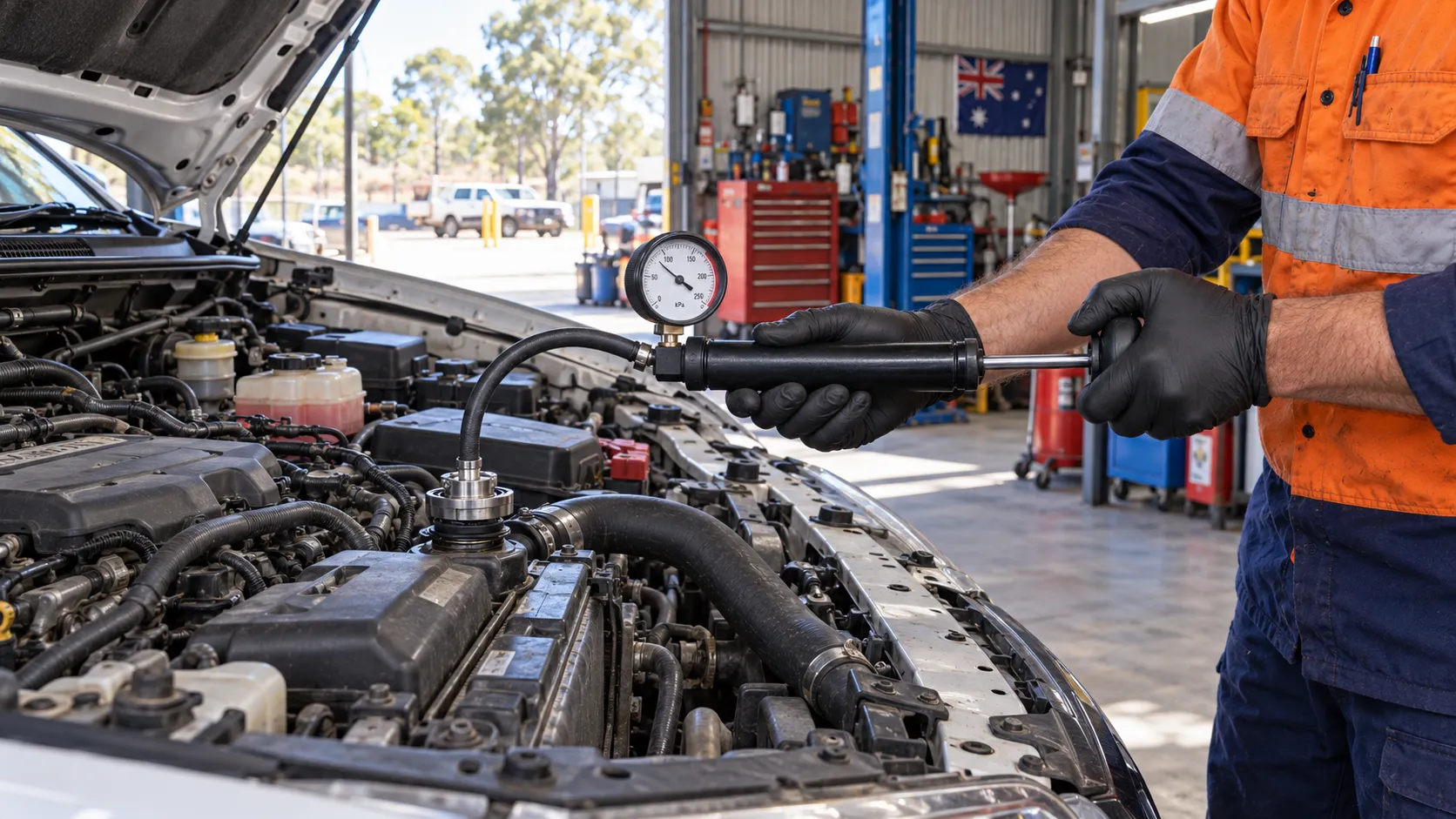
Fan checks may establish whether the fan operates when commanded and whether its controls respond appropriately. Comparing temperature readings with available diagnostic information can also help distinguish a cooling problem from an inaccurate display.
Further checks of coolant circulation, thermostat operation and radiator performance should follow the initial findings. There is no automatic repair sequence that requires replacing the radiator first.
Motorists should choose a Motorists should choose a licensed motor vehicle repair business with appropriately qualified and certified staff. Asking which findings support the proposed repairs can help distinguish necessary work from separate recommendations, supporting saving money on car repairs without cutting corners.
A car that gets hot in traffic needs attention even if its temperature improves on an open road. Recognising warning signs, stopping safely when overheating is suspected and arranging an assessment can help prevent further damage.
Kar Pro Tyre & Auto can be contacted to discuss the symptoms and arrange an inspection. After an overheating event, roadside assistance should advise whether the vehicle needs to be transported rather than driven to the workshop.


