


Finding the Cause of a Car That Keeps Using Engine Oil
November 26, 2026
A car that repeatedly needs engine oil may have an external leak, internal oil consumption or both. Adding oil restores the level, but it does not explain the loss. A growing need for top-ups deserves attention, even if the car still drives normally.
For drivers in Campsie, Kar Pro Tyre & Auto can assess recurring oil loss and explain the next steps. Recording how much oil is added, the distance travelled and any accompanying symptoms gives the workshop a useful starting point.
Oil can escape from the lubrication system or enter the combustion process and burn. A falling level alone does not establish which is happening or mean the engine is worn out. The rate of loss, engine design and manufacturer's guidance all matter.
An engine oil leak can develop around seals, gaskets, housings or lubrication-system connections. Oil may travel across surrounding surfaces before becoming visible, so the position of a driveway stain does not necessarily reveal its source. Other vehicle fluids can also leave marks.
Some leaks leave no obvious puddle because oil collects on an undertray, spreads across components or reaches hot surfaces. Others become more apparent when the engine is warm and running. During inspection, the mechanic needs to distinguish an active leak from old residue.
Internal engine oil consumption occurs when oil enters areas where it burns instead of remaining within the lubrication system. Possible pathways involve piston rings, valve stem seals, crankcase ventilation components or turbocharger components, where fitted.
These possibilities require investigation. Repeated top-ups alone cannot identify a failed component, and internal consumption can occur alongside an external leak.
Some consumption may fall within the manufacturer's guidance, but there is no acceptable figure that applies to every engine. A mechanic should assess the recorded usage against the requirements for the particular vehicle.
A clear account of what changed is more useful than trying to diagnose the fault before an appointment. Records help the workshop establish whether oil loss is stable, increasing or based on inconsistent readings.
Record the quantity of oil added and the odometer reading at each top-up. Needing oil every few weeks means little without knowing how far the car travelled during that period. Keeping vehicle maintenance records helps the mechanic review previous servicing and repairs alongside your oil top-up history.
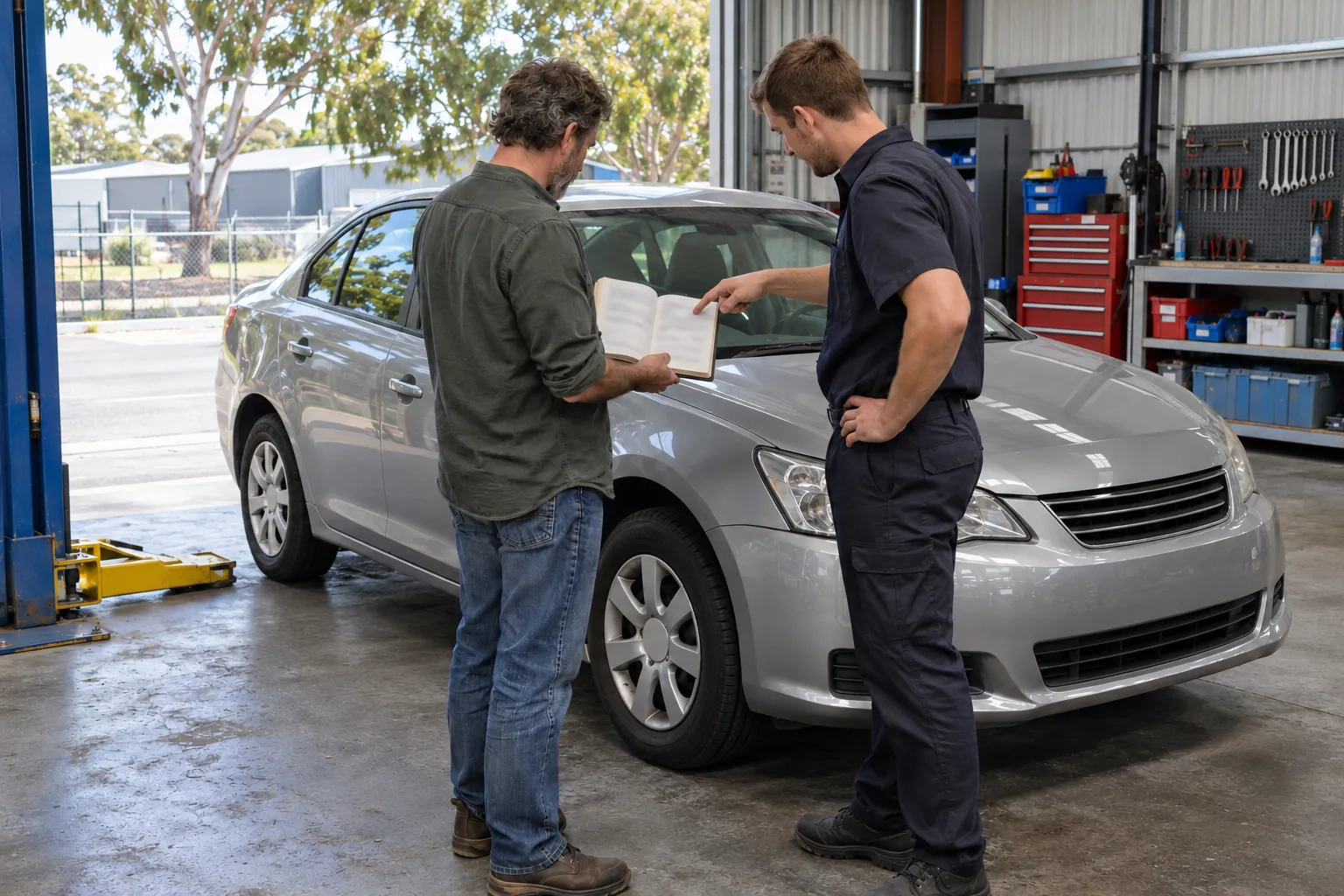
Tell the mechanic when the change began, whether top-ups are becoming more frequent and whether your driving conditions have changed. Mention recent servicing or engine work too. The timing may guide the investigation without proving that the work caused the problem.
Oil-level readings need to follow the manufacturer's procedure so comparisons are meaningful. Ask the workshop how to check and record the level for your vehicle, including any requirements about engine temperature, waiting time and parking conditions.
Report fresh marks beneath the car, an oily smell, exhaust smoke, rough running or unfamiliar noises. A photograph of a recurring stain can help without requiring you to crawl underneath the vehicle or remove covers.
If you have noticed exhaust smoke, explain whether it appeared at start-up, during acceleration or after idling. Blue or blue-grey smoke can suggest burning oil, but its appearance does not identify the faulty component. Internal consumption may also occur without obvious smoke.
Describe what happened during ordinary driving. Avoid repeatedly running or revving the engine to reproduce a symptom.
The correct oil supports engine operation, but changing products does not establish why oil is disappearing. Discuss the current oil specification and consumption history with the mechanic before trying an alternative.
Engine oil requirements include viscosity and performance specifications. Viscosity describes how oil flows under specified conditions; performance specifications cover other properties the engine requires. Matching the viscosity alone may not be sufficient.
Suitable oil can also be important to variable valve timing systems and turbochargers, where fitted. Any substitution should meet the engine's requirements. Bring a receipt or photograph of the oil container label if available, and tell the workshop if the product used is unknown.
A routine oil change does not repair a damaged gasket or resolve the cause of internal consumption. When booking servicing or general repairs, explain that the car needs repeated top-ups so the workshop can assess the loss as a separate concern.
Thicker oil may alter the rate at which oil passes through some clearances without repairing the underlying condition. Using oil outside the manufacturer's recommendations can also affect flow and components designed for a particular specification.
Additives may change smoke, noise or apparent consumption without confirming the cause. Introducing several products can make the history harder to interpret, particularly if no record is kept.
Ask what evidence supports a proposed oil change and how consumption will be reassessed afterwards. A product recommendation should follow the engine's requirements and inspection findings.
The findings should establish whether an identified leak needs repair, internal consumption needs further investigation or a defined monitoring period is appropriate.
When comparing the mechanics Campsie has to offer, ask how the workshop will investigate the loss and explain its findings before recommending repairs.
You can also check a motor vehicle repairer’s licence through Service NSW before booking an assessment.
The assessment may begin with confirming the oil level, reviewing recorded usage and inspecting for external leaks. Cleaning and reinspection may help where residue obscures the source.
If external leakage does not account for the loss, the mechanic may assess crankcase ventilation or recommend further engine testing. Compression or leak-down testing can be useful in some circumstances, but no single test answers every question about oil consumption.
Ask what each test is intended to establish and how its result would affect the next step. Clarify diagnostic charges and approval for additional work. Understanding how mechanic labour charges work can help when discussing the difference between an assessment and a repair quote.
If monitoring is recommended, agree on how usage will be measured, when it will be reviewed and which changes require earlier attention. This gives the process a clear purpose and review point.
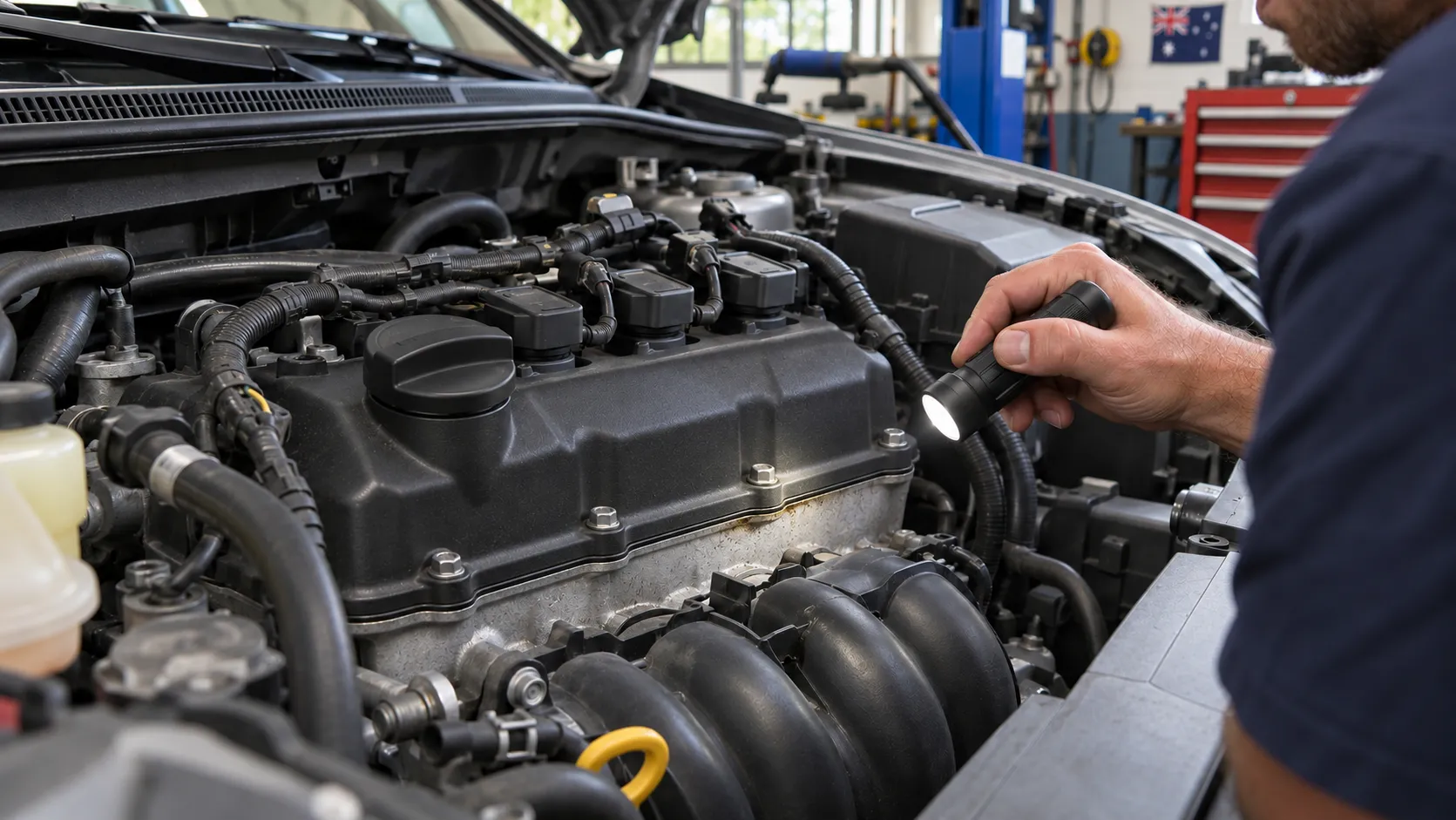
A sudden large leak or rapid drop in oil level needs prompt advice, even if the car previously managed with occasional top-ups.
An oil-pressure warning can indicate inadequate lubrication pressure. If it appears while driving, stop as soon as it is safe, switch off the engine and seek assistance. New engine knocking also warrants stopping safely and arranging professional help.
Do not restart simply because oil has been added or a warning has disappeared. Report any rapid loss, visible oil or new noise so the assisting professional can advise on assessment and safe transport.


